This blog is the place where I work things out in public.
Most of what I write here starts as a question I’ve had to answer for myself or for a client: How do you explain something complicated without losing people? How do you make content both accurate and useful instead of just “optimized”? How do you connect search, strategy, and the actual experience a reader has on the page?
You’ll see a mix of long-form guides, deep dives into specific topics, and pieces that look at the systems around content—workflows, standards, operations, and the way teams make decisions. I don’t write quick takes based on skimming a few search results. If I cover a subject, it’s because I’ve spent time understanding it and I think there’s something practical to say.
My goal isn’t to chase trends. It’s to make complicated things easier to understand, to show how content can support real people and real businesses at the same time, and to share what I’ve learned about doing that work in a way that holds up under scrutiny.
How to Build a Publishing Rhythm Across Teams Without Creating a Content Bottleneck
Consistent publishing depends on more than a content calendar. Learn how to coordinate intake, strategy, writers, editors, subject matter experts, clients, and creative teams so work keeps moving without sacrificing quality.
At one point in my career, I worked at a large commercial content and marketing agency with clients that included 3M, Inogen, Novartis, and Airstream.
My official title had “writer” in it, but that did not describe most of the job. In current content-team language, I was functioning as a senior content strategist and account lead.
When we brought on a new client, I participated in the discovery meeting. We discussed what the company wanted content to accomplish, who it needed to reach, which products or services mattered most, and what internal expertise we could access. I interviewed subject matter experts, proposed the content plan, and then usually created most of the content myself.
When the client needed a large volume of relatively straightforward blog content, we sometimes brought in subcontractors. I assigned and managed that work, answered questions, reviewed what came back, and made sure it fit the client’s goals and voice.
I also coordinated with editors, designers, and the art department. A campaign might need original illustrations, individual images, social assets, or video. I served as the liaison between the client, the agency owner, the production teams, and the other two women doing similar work.
Each of us carried around seven client accounts.
Once a week, the three of us met and went through the work. What was moving? What was waiting for review? Which client needed an answer? Which assignment depended on an interview, an image, an approval, or a decision from someone who was not in the room?
That job taught me that consistent publishing has surprisingly little to do with how fast a writer can type.
The drafts themselves were rarely the slowest part. Most delays accumulated in the handoffs.
A writer was waiting for the brief. The editor was waiting for the writer. The designer was waiting for approved copy. The account lead was waiting for the client. The client thought the agency was working on it. Three stakeholders had left comments, but nobody knew which person had the authority to approve the final version.
A content calendar can show you that an article is supposed to publish on Thursday. It cannot make Thursday happen.
A publishing rhythm comes from designing the work so each person knows what they owe, when they owe it, and what happens after they deliver it.
Start the Publishing Process Before the Assignment Exists
When a new client came into the agency, the discovery meeting shaped everything that followed.
I needed to know why the company wanted content.
“Publish four blog posts a month” is a production request. It does not explain whether the client is trying to generate leads, support sales conversations, educate customers, improve organic visibility, launch a product, strengthen authority, or maintain a relationship with an existing audience.
Those goals produce different plans.
A life-sciences company explaining a technical product may need extensive subject matter review and a slower approval path. A consumer brand may need stronger coordination between written content, photography, design, and video. A company launching a new software platform may need product education, sales enablement, onboarding content, and search content working together.
The discovery process should identify the audience, business goal, available expertise, required approvals, publishing channels, creative needs, and realistic production capacity.
It should also reveal what the client cannot provide quickly.
If every article requires an interview with one executive who is available for 30 minutes every six weeks, that constraint belongs in the content plan. The team cannot build a weekly publishing schedule around an expert who can only support one assignment a month.
I would rather learn that during discovery than after four writers have already been assigned.
Give Every Account an Operational Owner
Clients should not have to figure out which writer, editor, designer, or strategist to contact for each question.
At the agency, I was the point of contact for my accounts. I understood the client’s goals, knew what work was in progress, and could trace a delay across departments.
That did not mean I personally completed every task. It meant I remained responsible for knowing where the task was and what it needed next.
This distinction matters.
A project can involve ten people and still have one operational owner. That person maintains the brief, confirms the schedule, follows up on dependencies, communicates changes, and makes sure a stalled assignment does not quietly disappear.
The owner also protects the production team from conflicting instructions.
A client may email the writer with one request, tell the agency owner something different in a meeting, and leave a third set of notes in the document. Someone needs to reconcile those directions before the team starts revising.
Clear roles and responsibilities reduce the amount of time people spend figuring out who should respond, approve, revise, or decide.
For content projects, I want to know who owns the relationship, who owns the strategy, who writes, who edits, who verifies facts, who approves creative work, and who has final decision authority.
A person may hold several of those roles. The roles still need names.
Separate Requests From Approved Work
Content teams receive requests from everywhere.
Sales wants a one-sheet. Customer success needs an email. The CEO wants a thought-leadership article. Product needs release notes. A client sends a message asking whether the team can “quickly” create a landing page before next week.
When every request enters the workflow as an active assignment, the publishing schedule becomes a record of promises the team never consciously made.
A standardized intake process gives the team a consistent way to collect enough information to evaluate the work.
The request should explain who needs the content, what it should accomplish, where it will appear, when it is genuinely needed, what source material exists, and who will review it.
Then someone has to decide whether the request becomes approved work.
That decision should consider business value, urgency, effort, available capacity, and the effect on work already promised.
A deadline is not automatically realistic because a stakeholder typed it into a form.
At the agency, each account had a monthly scope and an expected publishing pace. When a client added a major new request, we had to determine whether it replaced something else, required additional budget, or moved into a later production window.
Without that conversation, the new work simply lands on top of the old work.
The bottleneck appears a few weeks later when every assignment reaches editing and design at the same time.
Build One Brief That Can Survive Every Handoff
A content brief should remain useful after the kickoff meeting ends.
The writer needs enough information to create the right thing. The editor needs to understand the intent behind the draft. The designer needs to know what the visual should accomplish. The client reviewer needs to remember what everyone agreed to before the work began.
When that information lives across an email thread, meeting notes, a chat message, and somebody’s memory, each handoff creates a new interpretation.
I prefer one single source of truth for the assignment.
It should contain the audience, purpose, channel, message, deliverable, sources, subject matter experts, search considerations, required claims, prohibited claims, creative needs, call to action, review path, and deadline.
It should also document decisions made after the project begins.
Suppose the client originally asks for an article aimed at healthcare professionals, then decides during drafting that it should speak to patients. That change affects the terminology, depth, examples, risk level, and probably the approval process.
The brief should record the change. Otherwise, the editor may evaluate the draft against the original audience while the client reviews it against the new one.
A brief does not need to be enormous. It needs to answer the questions that would otherwise interrupt production later.
Make Every Status Mean Something
A status such as “in progress” can hide almost anything.
The writer may be drafting. The assignment may be waiting for an interview. The client may owe the team product information. The editor may have returned revisions. The designer may be creating an illustration.
Those are different situations, and they require different actions.
I want workflow statuses that tell the team what is happening and who currently owns the next step.
StatusWhat it meansApprovedThe request has scope, priority, and an ownerResearchingSources or SME input are being collectedDraftingThe writer has everything needed to workInternal reviewEditorial, factual, or compliance review is underwayClient reviewThe client has the approved review versionRevisionsSpecific feedback has been returned to the production teamCreative productionDesign, illustration, photography, or video is in developmentScheduledThe content is approved and assigned a publication datePublishedThe asset is live and has passed a final quality checkMonitoringPerformance or post-publication issues are being reviewed
The exact names can change. The important part is that each status has a defined meaning.
“Client review” should also have an owner and a due date. Otherwise, it becomes a storage location for work that may sit untouched for three weeks.
Schedule the Dependencies, Not Just the Draft
Written content often depends on work that does not appear on the editorial calendar.
At the agency, I might need to coordinate an interview with a technical expert, request a custom image from the art department, send a video concept for approval, and reserve editing time before the final asset could be delivered.
If the calendar only says “article due May 15,” it ignores most of the project.
The real schedule might include an SME interview on April 22, an outline review on April 25, a first draft on May 2, editorial review on May 5, client review by May 9, final copy by May 12, and completed creative by May 14.
That schedule tells us when the work can still recover from a delay.
If the SME misses the interview, we know immediately that the drafting date is at risk. If the client takes eight days to review a document that had a three-day review window, the publication date moves unless the team has enough buffer to absorb it.
Creative production needs the same visibility.
Designers should not discover on the day before publication that an article requires six custom graphics and a video thumbnail.
For a visually driven client, the creative concept may need to develop alongside the copy. The words and images are sometimes explaining the same idea together. Treating design as decoration added after approval produces rushed work and unnecessary revisions.
Treat Subject Matter Expert Time as Production Work
Subject matter experts are often expected to participate in content creation around their “real” jobs.
That makes their involvement easy to underestimate.
A technical or medical expert may need to prepare for an interview, review a draft, verify a claim, provide source material, and answer follow-up questions. That work requires time, even when nobody describes it as a formal assignment.
For clients such as Inogen or Novartis, a writer could not responsibly improvise the details because an interview was difficult to schedule. Technical accuracy depended on access to people who understood the subject.
I tried to make SME participation efficient.
Before an interview, I reviewed the available material and prepared specific questions. I did not use expert time to ask for information already available on the company website.
Afterward, I organized the notes so the SME would not have to repeat the same explanation for the writer, editor, client contact, and designer.
When possible, one interview supported several related assets.
An expert conversation about a product, customer problem, or technical process might inform a blog post, website page, social content, sales material, and future updates. That makes the interview more valuable and reduces the number of separate requests sent to the same person.
The workflow should reserve time for SME review and explain what kind of review is needed.
“Let me know what you think” invites a complete rewrite.
“Please verify the technical accuracy of the highlighted sections by Thursday” gives the expert a clear job.
Review the Content in Layers
Review becomes slow when every stakeholder comments on everything.
The legal reviewer rewrites the introduction for style. The executive changes punctuation. The editor questions a technical detail. The subject matter expert replaces the call to action. The designer suggests a new business message after the layout is complete.
The document returns with dozens of comments that solve different problems and sometimes contradict each other.
I prefer layered review.
The writer and strategist first confirm that the draft fulfills the brief. Editorial review addresses structure, clarity, voice, and consistency. Subject matter review checks factual and technical accuracy. Compliance or legal review addresses regulated claims and risk. The final client approver confirms that the asset is ready to represent the organization.
Some reviews can happen at the same time. The responsibilities should remain distinct.
The document system should preserve a visible version history so the team can see what changed, restore approved language when necessary, and avoid emailing files named FINAL_v7_REVISED_FINAL2.
Each review round also needs boundaries.
When the client approves the strategy and outline, the review of the completed draft should not reopen the entire topic unless new information requires it.
Late structural changes are sometimes necessary. They should be recognized as changes to scope and schedule rather than treated as ordinary proofreading.
Give Feedback Through One Channel
Client feedback becomes difficult when it arrives in fragments.
One person leaves document comments. Another sends an email. A third explains concerns during a call. Someone forwards a message from an executive who has not seen the brief.
The account lead then has to determine which comments are current, which are approved, and which conflict.
I asked clients to consolidate feedback whenever possible.
That did not mean only one person could participate. It meant the client needed a process for resolving internal disagreements before returning instructions to the production team.
The agency could help facilitate that decision. We could explain the strategic consequences of the options, flag conflicting requests, and recommend a direction.
We still needed one approved set of revisions.
Open-ended revision cycles damage the publishing rhythm because they consume capacity that was already assigned to future work.
A project expected to use one draft and two review rounds cannot quietly become six rounds without affecting every other deadline.
Use Senior Attention Where It Changes the Outcome
I created most of the strategic and technically demanding content for my accounts.
We sometimes contracted out simpler, high-volume assignments, especially when a client needed a larger batch of straightforward blog posts.
That decision was not based entirely on word count.
A 700-word article involving a regulated claim, a sensitive audience, or an important product launch might require more senior attention than a 2,000-word evergreen guide with a stable source package.
The account lead should decide which work requires deep client knowledge and which work can move through a repeatable production system.
Subcontracted work still needs a strong brief, an available point of contact, an editor, and clear acceptance standards.
Sending an outside writer a title and a deadline creates more work later when the draft arrives with the wrong audience, message, or level of detail.
The purpose of delegation is to increase capacity while protecting quality.
That requires enough preparation that another skilled person can enter the system and succeed.
Use Weekly Meetings to Clear Obstacles
Our weekly account-lead meeting worked because it focused on the state of the work.
Each of us managed roughly seven clients. We did not have time to narrate every email or read every task aloud.
We needed to identify where the production system required attention.
Which account was likely to miss its monthly output? Which client had not returned feedback? Which writer needed clarification? Which editor was overloaded? Which creative request had not been assigned? Which project required the owner’s decision?
A good status meeting should move blocked work.
Routine updates can live in the project system. The meeting is useful when the people in the room can make a decision, shift capacity, escalate a client issue, or remove an obstacle.
I also want the meeting to look ahead.
If three clients have major launches scheduled for the same week, discovering that conflict during final review is too late. The team needs to see the pressure several weeks in advance and adjust assignments before the pileup reaches production.
Publishing rhythm depends on maintaining enough visibility to prevent predictable emergencies.
Protect Some Capacity for Real Urgency
Unexpected work will happen.
A client may face a regulatory change, product issue, breaking news event, executive request, or time-sensitive opportunity.
The team needs a way to handle urgent work without pretending every incoming request is urgent.
I prefer reserving a small amount of capacity for unplanned needs.
When that capacity is used, the team should still document what changed. If an emergency landing page replaces a scheduled article, the article receives a new date. It does not remain due on the original date while the same team completes both.
Urgent work has a cost.
Making that cost visible helps stakeholders decide whether the request truly deserves to interrupt the plan.
Measure the Handoffs
Many content teams measure output without measuring the process that produces it.
They know how many articles were published. They may not know that drafts spend an average of two days in writing, twelve days in client review, and another week waiting for images.
That information changes how I would improve the workflow.
If research is slow, the team may need better source packages or earlier SME scheduling. If editing is overloaded, the solution may involve more editorial capacity or narrower review standards. If client approvals create the longest delay, the account lead may need clearer review dates, fewer approvers, or an escalation process.
Useful operational measurements include the time from approval to publication, the time spent in each status, the number of revision rounds, the percentage of work published on schedule, and the amount of planned work displaced by urgent requests.
The purpose is not to pressure people into moving faster at every stage.
The purpose is to see where the system regularly loses time.
Build Publication Into the Content Lifecycle
Publishing is a major milestone. It is not the end of the work.
Someone needs to check the live page, links, metadata, images, formatting, and calls to action. Creative assets need appropriate alt text. Tracking needs to work. The client should receive the final link.
Content also needs future ownership.
A product page may need updates when specifications change. A medical article may require periodic factual review. A campaign page may need to be retired when an offer ends. An evergreen blog post may need new links, examples, or conversion paths as the business evolves.
A sustainable content lifecycle includes creation, review, publication, maintenance, measurement, and retirement.
When teams treat every published asset as permanently finished, the website eventually fills with old offers, outdated claims, broken links, and content nobody feels authorized to change.
The same account ownership that supports publication should also define what happens afterward.
A Publishing Rhythm Is a Series of Reliable Commitments
At the agency, I could move several clients forward at once because I understood the work surrounding the writing.
I knew which expert needed to be interviewed, which client had review authority, which editor had capacity, which creative asset needed to be requested, and which project required a decision before anyone could continue.
That visibility allowed me to communicate honestly.
I could tell a client what was on schedule, what we needed from them, and what would happen if an approval arrived late. I could give a writer enough context to draft confidently. I could send an editor a document that was genuinely ready for editorial review. I could approach the art department before the creative request became an emergency.
A reliable publishing rhythm does not require every week to look identical.
Some pieces need more research. Some clients need more review. Some campaigns require video, design, legal input, or several subject matter experts.
The system accounts for those differences before the deadline.
Good content operations give people room to do skilled work while keeping the next person from waiting unnecessarily.
The intake process protects capacity. The brief preserves the strategy. The account owner protects continuity. Defined reviews protect the draft from contradictory feedback. Meaningful statuses expose delays. Weekly meetings remove obstacles. Post-publication ownership keeps the content useful.
That is how a team publishes consistently across clients and departments without turning the most responsible person in the workflow into the permanent bottleneck.
One Topic, Six Channels: How to Build a Multi-Channel Content System Without Repeating Yourself
Publishing the same message across six channels does not create a multi-channel strategy. Learn how to turn one well-researched topic into useful website, blog, email, newsletter, social, and long-form content, with a distinct purpose and next step for every audience.
Dealership marketing is a perfect place to see what happens when a company confuses content distribution with copying and pasting.
A new three-row SUV arrives, and within a day, the same paragraph appears on the dealership website, in an email, in the monthly newsletter, on Facebook, and under a video walkaround. Sometimes the headline changes. The actual content does not.
I spent enough time working in automotive content to understand how this happens. Dealerships have a lot to publish. Inventory changes quickly. The sales department needs an email. The social team needs something for Instagram. The website needs a landing page. The newsletter deadline is tomorrow. Everyone wants the content immediately, so the fastest solution is to take whatever already exists and move it somewhere else.
Reusing the research makes sense. Reusing the same asset in six places wastes six different opportunities.
A customer looking at an SUV comparison page is in a different state of mind from someone scrolling Instagram while waiting to pick up their kids. The person opening a dealership newsletter may already know the brand. The person entering through Google may have never heard of the dealership.
They may all care about the same general subject, but they do not need the same content.
A strong multi-channel system begins with one useful topic and develops it according to the job each channel needs to do.
Start With a Topic Large Enough to Support a System
For this example, imagine an automotive dealership wants to build a content campaign around this topic:
How to choose the right three-row SUV for your family
This is a useful subject because it connects to real customer questions and actual dealership inventory.
Someone comparing family SUVs may want to know whether adults can sit comfortably in the third row, how easily children can reach the back seats, whether car seats block third-row access, and how much cargo space remains when every seat is occupied. They may need to fit a stroller without lowering a seat, tow a trailer, compare fuel costs, or decide whether a used model would give them more features within their budget.
There is enough substance here for multiple pieces of content. There is also a clear business path from general education to viewing inventory, scheduling a test drive, valuing a trade, or contacting the dealership.
Before anyone writes the first asset, I would create a source brief for the entire topic. It should establish:
The audience, business objective, customer questions, relevant inventory, approved product information, available experts, required photos or video, possible calls to action, expiring details, and campaign measurements
That source brief becomes the shared foundation for every channel.
The content team can reuse the research, expert interviews, vehicle demonstrations, photography, and strategic message without making every asset sound alike.
Channel One: The Website
The dealership website has to help the shopper move forward.
For our family SUV topic, I would create a permanent landing page or shopping guide that sits close to the dealership’s inventory.
It might help readers compare two-row and three-row vehicles, captain’s chairs and bench seating, passenger space and cargo space, new and used options, and models at different price points.
The information should connect directly to vehicles the customer can view.
Someone who decides they need a usable third row should be able to see relevant inventory. Someone who realizes they care more about cargo space than passenger capacity should be able to browse a different category. Someone who still feels uncertain should have an easy way to request help from a salesperson.
The website version needs enough information to support the decision without placing a 3,000-word essay between the shopper and the inventory.
It also needs to remain accurate.
A dealership’s website, hours, contact details, and other basic information should stay consistent with its Google Business Profile and other local listings. Customers lose confidence quickly when one source says the dealership is open, another says it is closed, and a third sends them to an old phone number.
The website page becomes the campaign’s main destination. Other channels can point people toward it, but the page still needs to make sense when someone arrives directly through search.
Channel Two: The Blog
The blog gives the subject room to breathe.
This is where I would publish the full educational article:
How to Choose the Right Three-Row SUV for Your Family
The article can explain how different families use their vehicles and why the same SUV will not work equally well for everyone.
A family with three children in car seats has different access needs from a family with two teenagers. Someone who takes several road trips each year may care about cargo space with the third row in use. Someone who regularly transports grandparents may need to consider step-in height and how easily passengers can reach the rear seats.
The blog can teach readers how to evaluate a vehicle instead of simply listing features.
Cargo capacity becomes more meaningful when the writer explains what can realistically fit. A number of cubic feet may mean very little to the average shopper. Showing whether the space holds a stroller, sports equipment, luggage, or a week of groceries gives the measurement context.
The article can also help readers prepare for the test drive. Tell them to bring the car seat they use most often, the stroller that normally stays in the vehicle, the family member who will usually sit in the third row, and anything else they need to carry every week.
That kind of advice remains useful even if the reader does not buy a vehicle that afternoon. It also gives the dealership’s sales team a better-prepared customer.
This is where people-first content matters. The article should answer the questions families actually have, using the dealership’s experience with real vehicles and real shoppers. A page can attract search traffic and still fail to help anyone choose a car.
Channel Three: Email
Email has context that the blog usually does not.
The dealership may know that someone viewed several three-row SUVs, submitted a trade-in form, downloaded a guide, or asked about a particular model. That information should influence what the person receives.
I would not send the entire blog post in an email.
A short email sequence could divide the subject according to the shopper’s progress.
The first email might help them decide what their family actually needs. How many people ride in the vehicle regularly? What car-seat configuration are they using? What do they carry? Do they tow anything? What does the daily drive look like? The call to action could lead to the full guide or to inventory filtered by the shopper’s priorities.
The second email might focus on what to test in person. Move the second-row seats while the car seat is installed. Load the stroller. Sit in every row. Connect the phone. Check visibility from the driver’s seat. The next step could be scheduling a comparison test drive.
A third email could feature a small number of currently available vehicles that align with the shopper’s needs.
That final detail matters. An email promoting a vehicle that sold three days earlier makes the entire campaign feel automated in the least flattering way.
Commercial email also needs a process that follows CAN-SPAM requirements, including accurate sender information and a working way for recipients to opt out. That should be built into the campaign system rather than remembered when the email is almost ready to send.
Channel Four: The Newsletter
A dealership newsletter has a different relationship with the reader.
Some recipients may be shopping now. Others bought a vehicle two years ago. Some use the service department and have no immediate plans to replace their car.
The newsletter version should be broadly useful and easy to enter.
For this topic, the newsletter could include a short feature called The Five-Minute Family SUV Test.
It might ask readers to check whether someone can reach the third row without removing a car seat, whether the cargo area holds what the family carries every week, and whether an adult can sit comfortably in every seat they may realistically use.
The newsletter can then link to the full article, a comparison page, or a short video demonstration.
It does not need to explain every seating configuration or model difference. It gives the existing audience one helpful idea and a reason to continue reading when the subject is relevant to them.
The newsletter can also connect the topic to ownership. A reader who already has an SUV may care about seasonal service, tire wear, cargo accessories, roof racks, towing equipment, or preparing for a family road trip.
Those connections let the dealership remain useful to current owners without turning every newsletter into an immediate sales pitch.
Channel Five: Social Media
Social content works best when the platform can show something the article can only describe.
A dealership has access to vehicles, salespeople, technicians, service bays, tools, accessories, and the physical details customers want to see. That is a significant content advantage.
For the three-row SUV campaign, the social team could record an adult entering and exiting the third row, test the same stroller in several models, compare captain’s chairs with bench seating, or demonstrate how a second-row seat moves while a car seat is installed.
A short cargo test with all the seats in use may be more helpful than a polished promotional video. A salesperson can answer one question in thirty seconds. A carousel can show shoppers what to bring on a test drive. A poll can reveal which feature the audience actually cares about most.
Each post should make sense inside the platform.
A caption that says, “Read our new blog,” gives the reader very little reason to stop scrolling. The post should provide a complete, useful insight and then offer the article or inventory page as the next step.
For example:
Before buying a three-row SUV, check how the second row moves with your car seat installed. Some seats tilt forward differently, and that can affect whether your children can reach the back row without rearranging the entire vehicle.
That information stands on its own. The link can lead to a more complete comparison.
Every video should also include accurate captions. Dealership content is frequently watched without sound, and captions make the information accessible to people who are deaf or hard of hearing.
Channel Six: The Long-Form Resource
A long-form resource should give the reader something worth saving.
For this campaign, I would create a downloadable Family SUV Buyer’s Workbook.
The workbook could help the customer define household needs, map the seating arrangement, test car-seat access, evaluate cargo space, compare towing requirements, review trims, score a test drive, and record notes on several vehicles.
The sales team could use the same workbook during appointments. That gives marketing and sales a shared framework for discussing what the customer actually needs.
The guide may also function as a lead-generation resource, but the content has to justify the form.
Asking for someone’s name, email address, and phone number in exchange for a lightly reformatted blog post creates disappointment before the sales conversation begins. A substantial worksheet, comparison tool, or buyer guide gives the reader something meaningfully different from what was already available on the website.
One Topic Should Share Facts, Not Sentences
The six assets should agree with one another.
They should use the same product facts, audience understanding, strategic message, approved claims, visual identity, campaign goals, and general brand voice.
They should not rely on identical paragraphs.
I usually give every channel its own mini-brief by answering four questions:
What is the reader doing when they encounter this?
What does this channel allow us to do well?
Which part of the topic is most useful here?
What should the reader be able to do next?
Those questions prevent the team from treating every channel like another empty box that needs words.
ChannelPrimary jobBest next stepWebsiteHelp shoppers compare and move toward inventoryView vehicles or request helpBlogAnswer research questions in depthExplore inventory or schedule a comparisonEmailContinue a known shopper’s decision processReturn to vehicles or book a test driveNewsletterMaintain usefulness with the existing audienceRead, watch, or explore related contentSocial mediaDemonstrate information visuallySave, share, comment, or visit the full resourceLong-form guideSupport detailed evaluationDownload, compare, or use during an appointment
The topic remains recognizable across the campaign. The experience changes according to the channel.
Build the Campaign From a Shared Source of Truth
Multi-channel content becomes difficult when every asset starts from scratch.
The blog writer interviews a salesperson. The email writer asks another salesperson the same questions. The social team records a video before anyone checks the vehicle details. The website team works from a model brochure that is already outdated.
A shared source package reduces that repetition.
For an automotive campaign, I would collect manufacturer specifications, current inventory, approved pricing and offer details, original photography, demonstration footage, notes from sales and service staff, common customer questions, search research, local considerations, compliance requirements, and expiration dates.
Then I would identify which statements require verification every time they appear.
A general explanation of third-row access may stay accurate for months. A specific price, incentive, payment, or inventory count may change before the next morning.
Dealership content needs clear ownership for those updates.
Account for Content That Expires
Automotive content often combines evergreen guidance with information that can become inaccurate quickly.
The family SUV article may remain useful for years. The featured inventory, financing offer, and available trim levels may not.
I separate those elements whenever possible.
The main educational content can live on a stable URL. Dynamic inventory modules, current offers, and calls to action can be updated without rewriting the entire article.
The campaign brief should identify when each offer ends, who verifies inventory before an email is sent, which pages contain changing prices or incentives, when factual reviews are scheduled, and which assets can remain live after the promotional campaign ends.
Price, payment, financing, availability, and performance claims need especially careful review. The FTC’s standard for truthful and non-deceptive advertising is a useful baseline because the complete impression matters. A disclosure in tiny text cannot repair a headline that gives customers the wrong idea.
The content system should make accuracy routine. It should not depend on someone remembering to check every claim five minutes before publication.
Plan the Sequence
Publishing all six assets at once is rarely necessary.
I would usually begin with the content that other assets need to reference.
During the first week, the team can complete the research, record vehicle demonstrations, and publish the primary website and blog resources. The second week can introduce social videos, the first shopper email, and a newsletter feature. The workbook and additional comparison content can follow after the team has had time to see what people are clicking, watching, and asking about.
That sequencing gives the team time to learn.
A social video may reveal that customers care more about stroller space than expected. Email activity may show stronger interest in used vehicles. Sales staff may hear the same question repeatedly during test drives.
Later content can respond to what the audience is actually doing instead of following a campaign plan that was treated as final before the first customer saw it.
Measure Each Channel According to Its Job
The campaign should have a shared business objective, but every channel needs measurements that reflect what it was designed to do.
The website may be evaluated through inventory views, calls, form activity, trade-in submissions, and test-drive requests. The blog may be judged by qualified search traffic, engagement, clicks into inventory, assisted leads, and return visits.
Email can be measured through clicks, inventory views, appointment activity, replies, and unsubscribes. The newsletter may be more valuable as a source of returning visitors and continued engagement with ownership or service content.
For social, I would pay attention to video completion, saves, shares, comments, profile actions, and website visits. For the workbook, I would look at downloads, follow-up activity, sales-team usage, and whether it improves appointments or sales conversations.
Use consistent UTM parameters so the team can identify which campaign and channel sent traffic to the website.
I would still review the campaign as a whole.
A customer may watch a social video, read the blog a week later, open an email, and then call the dealership directly. The final phone call does not tell the whole story.
Content often works through accumulation. The shopper reaches the dealership with more familiarity, better questions, and greater confidence because several useful interactions happened first.
A Multi-Channel System Makes the Research Work Harder
A dealership may spend hours interviewing staff, reviewing inventory, filming vehicles, checking specifications, and understanding what customers ask before buying a family SUV.
That work should support more than one article.
A good system allows the team to use the full value of the research while respecting the way people use each channel.
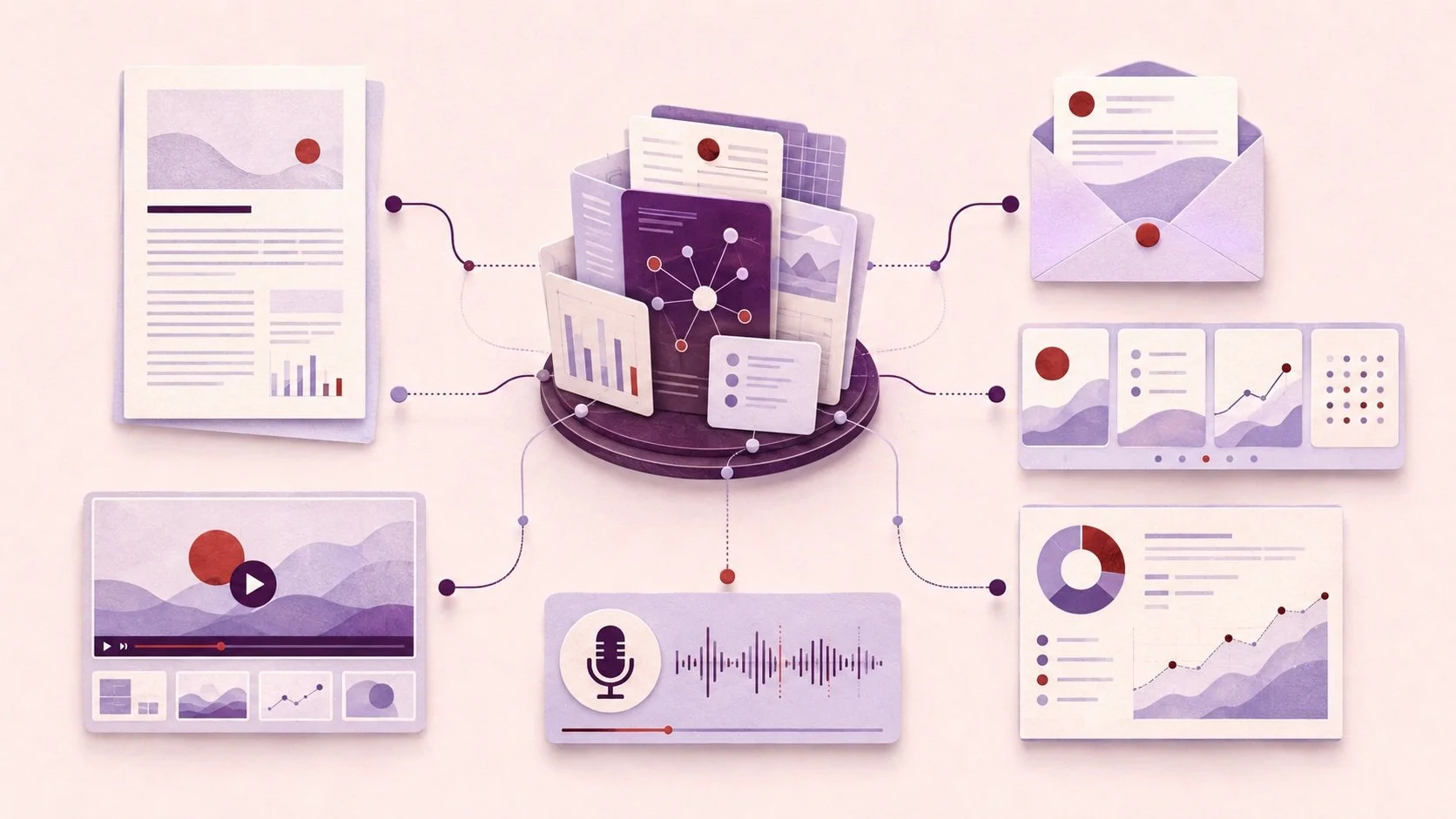
The website helps them shop. The blog helps them understand. Email continues the conversation. The newsletter maintains the relationship. Social demonstrates the details. The long-form guide helps them compare and decide.
One topic can support all six without sounding like six copies because every asset has its own audience, job, format, and next step.
That is how a content team publishes more without making the content thinner.