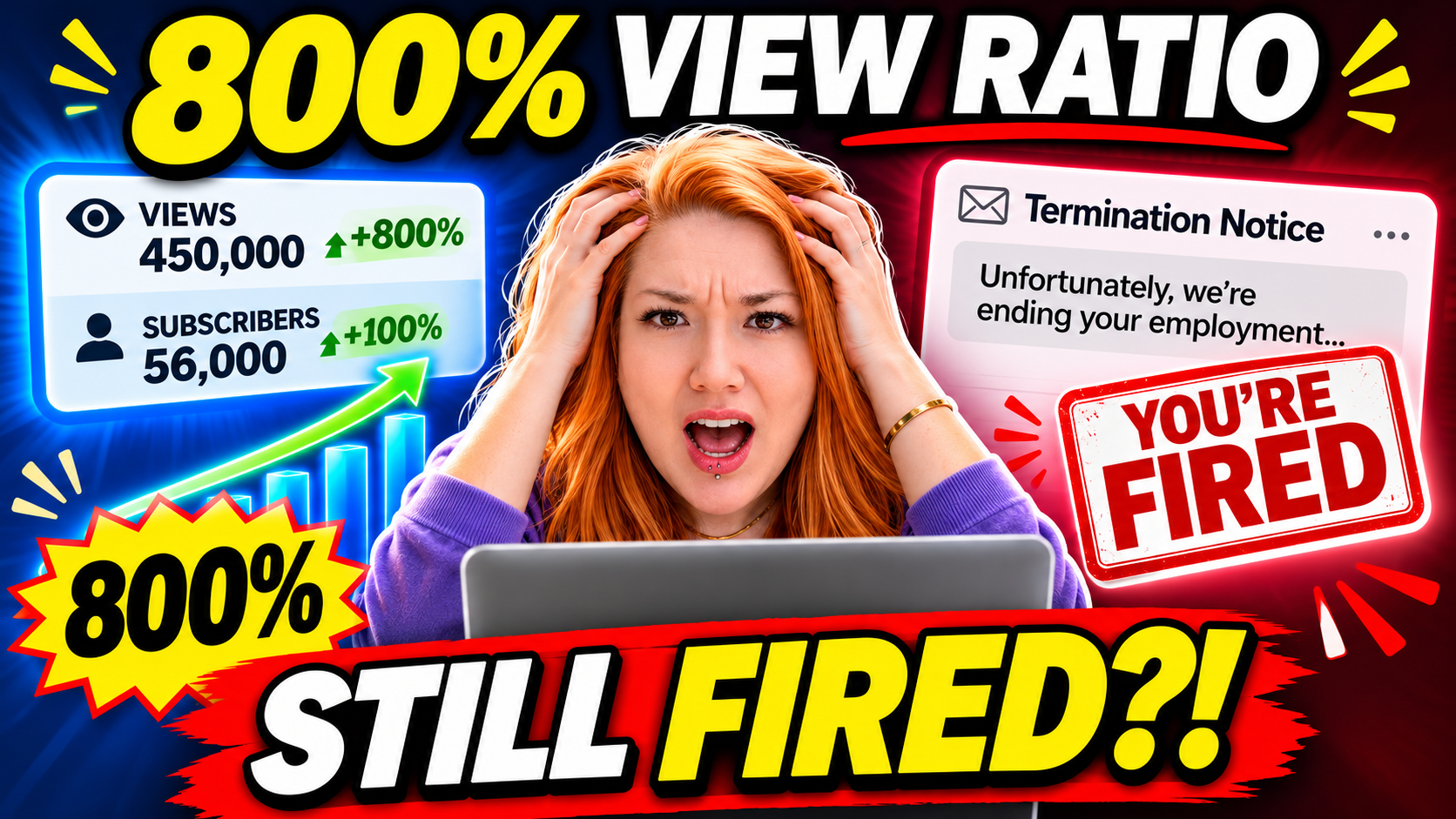
I was hired to write YouTube scripts at a very low rate. 96% below average, to be exact. And that should have been a huge red flag, but I was just starting out, and I really wanted to write about something I loved. It’s nearly a cannon event for plucky young writers to work for horrible rates when they first launch. As it would turn out, turning around work that performed well for almost no money was not enough for me to keep the client. Lemme tell you why.
What Does an 800% View-to-Subscriber Ratio Actually Mean?
It means 800 times more people viewed the video than the channel had subscribers. My video wasn’t just driving engagement and new subscribers, but it had broad reach well beyond our regulars. I’m pretty good at ideation and choosing topics people are interested in.
Not every client measures success the same way, and not every success works for every client. As it turned out, the quality of my content was irrelevant to the client, and I was fired for slowing production too much. Here’s what went down.
Two Hours Without Answering an Email. The Horror.
My client reached out to me to fix a spelling error. Two hours later, I saw the email. The subject line read “Need You to Correct Spelling: beat.” This was doubly perplexing to me because not only is B-E-A-T the correct spelling of that word, but I also didn’t use that word in my script. I opened the email hoping for an explanation.
There wasn’t. The body read “Now, please.”
I opened the script and searched B-E-A-T. 0 results. I hit backspace on the T. Nothing. Backspace on the A: 8 results. One of them was “best” in the phrase “best the competition.” He thought my common idiom was a spelling error.
This is typically the kind of exchange I find hilarious and joke about later. I emailed back a quick explanation: “Hi there, using the word best was an intentional choice. It’s an American English idiom, and our American and Canadian audience will recognize it. I hope you’re having a great day!”
Shortly after that, he messaged me, “Well, you took so long to reply. Because of this production slowdown, we’re going to part ways. Best of luck.”
That was that. I was bewildered.
Unspoken Client Communication Expectations Have Nothing to Do With Your Work
Every part of this interaction left me scratching my head, but perhaps the biggest question I was left with was, “Why did he expect me to email him back that fast? Isn’t building in time into the workflow for revisions HIS job?” The answer is, he expected me to email him back right away because that’s how he expects communication to go. There’s nothing wrong with that.
The problem was, he never told me. I’m a multitalented person, but mind reading is not one of my skills.
But isn’t establishing communication expectations MY job?
What I Wish I'd Established With the Client
I was getting content mill rates for work that was performing better than 75% of the channel’s content. And I was apparently expected to be at the client’s beck and call. I should have specifically asked what their expectations were around communications and reply times. Or better, suggested they call, text me, or instant message me if they needed an answer fast. I should have explained that I only check my email twice a day.
More than anything, I wish I had been paid more than $17 for scripts dripping with insider information and original research.
How Freelancers Can Protect Themselves From Unspoken Client Expectations
Here's the problem with unspoken expectations: You can't meet requirements you don't know exist, but you can absolutely lose a client for failing to meet them. In my case, it was not a client worth fighting for, but it was a warning for the future: You can’t do a good job if you don’t know what that looks like to the client.
Clients don't always realize they have unusual expectations. Sometimes they've spent so long working one way that they assume it’s the norm. Other times, they're overwhelmed, and every minor inconvenience becomes a five-alarm fire. Whatever the reason, the freelancer is often the one who pays for the mismatch. The best protection is to establish expectations before accepting an assignment, especially around the parts of the relationship that aren't included in the deliverables.
Get these five things in writing:
Communication channels and response times. How quickly are you expected to answer emails, messages, or revision requests? Does the client expect responses during specific business hours? Is same-day availability required? What’s the best way to reach them? How do you want them to reach you?
Deadlines and turnaround times. When are deliverables due, and when will the client provide the information or feedback you need? What happens if their delay affects your deadline?
Revision limits and approvals. How many rounds of revisions are included? Who has final approval? What happens when multiple stakeholders provide conflicting feedback?
Scope of work. Are you being hired strictly to write, or are you also responsible for research, SEO optimization, uploading content, attending meetings, and managing the editorial calendar? Make sure those responsibilities are reflected in your rate.
Urgent requests and additional availability. What qualifies as an emergency? How should the client contact you? If they require priority access to your time, is that included in your agreement or billed separately?
The Lesson I'm Taking With Me
I'm not going to pretend that taking two hours to answer an email was some terrible professional failure. It wasn't.
I delivered the work I was hired to do. The videos performed well. And at approximately 1.24 cents per word, I certainly wasn't charging enough to include around-the-clock editorial support.
But there's something I could have done differently.
I should have asked more questions before accepting the assignment. Not just about the scripts, the deadlines, and the client's expectations for the finished videos, but about what he expected from me throughout the production process.
I’m not mad that they made business decisions based on their goals and preferences. I learned something important for the future. Hopefully no one else gets fired because they take 2 hours to answer an email.
