This blog is the place where I work things out in public.

Most of what I write here starts as a question I’ve had to answer for myself or for a client: How do you explain something complicated without losing people? How do you make content both accurate and useful instead of just “optimized”? How do you connect search, strategy, and the actual experience a reader has on the page?

You’ll see a mix of long-form guides, deep dives into specific topics, and pieces that look at the systems around content—workflows, standards, operations, and the way teams make decisions. I don’t write quick takes based on skimming a few search results. If I cover a subject, it’s because I’ve spent time understanding it and I think there’s something practical to say.

My goal isn’t to chase trends. It’s to make complicated things easier to understand, to show how content can support real people and real businesses at the same time, and to share what I’ve learned about doing that work in a way that holds up under scrutiny.

Content Operations, Content Strategy Danyell Marshall Content Operations, Content Strategy Danyell Marshall

How to Build a Publishing Rhythm Across Teams Without Creating a Content Bottleneck

Consistent publishing depends on more than a content calendar. Learn how to coordinate intake, strategy, writers, editors, subject matter experts, clients, and creative teams so work keeps moving without sacrificing quality.
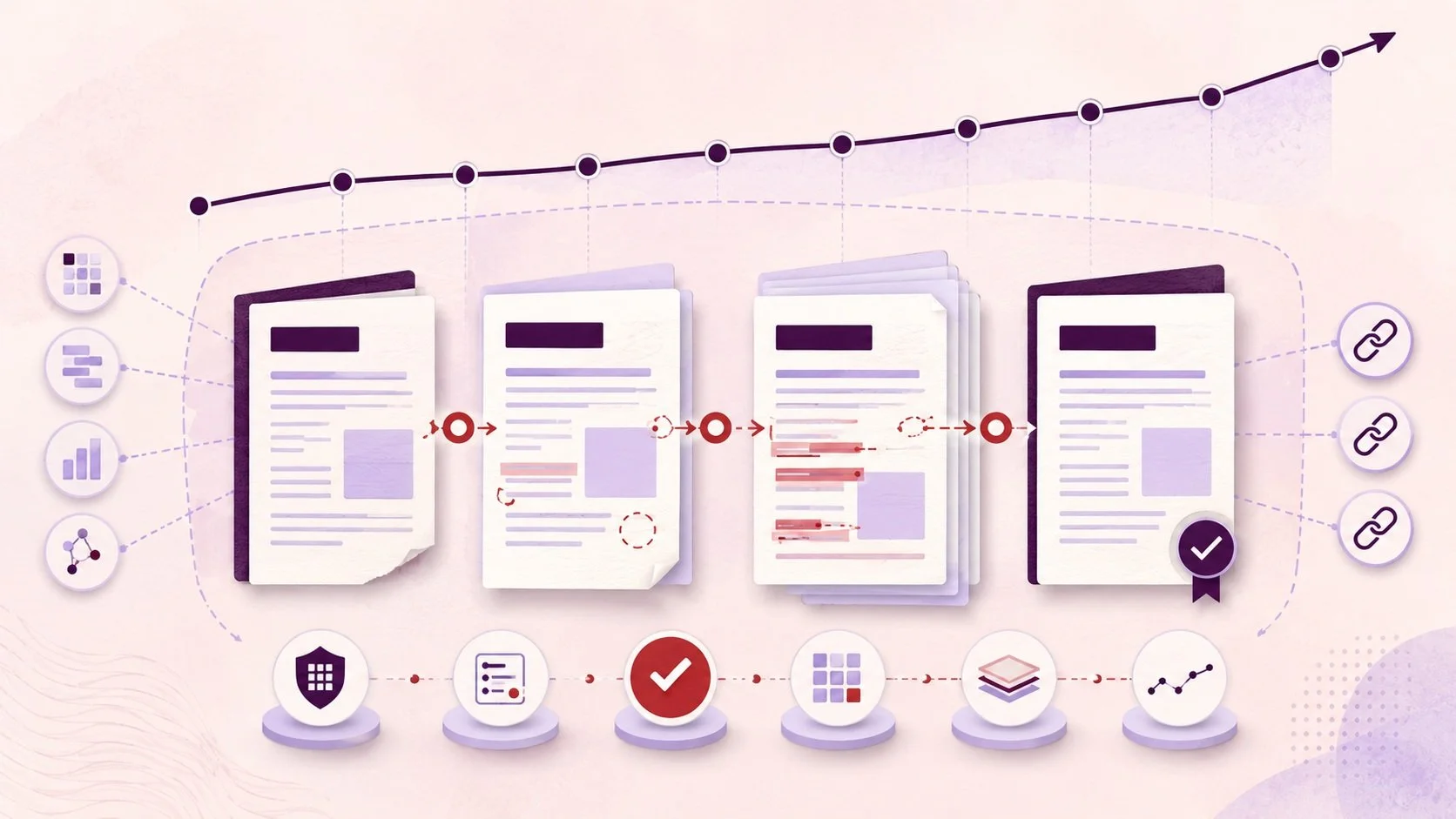
At one point in my career, I worked at a large commercial content and marketing agency with clients that included 3M, Inogen, Novartis, and Airstream.

My official title had “writer” in it, but that did not describe most of the job. In current content-team language, I was functioning as a senior content strategist and account lead.

When we brought on a new client, I participated in the discovery meeting. We discussed what the company wanted content to accomplish, who it needed to reach, which products or services mattered most, and what internal expertise we could access. I interviewed subject matter experts, proposed the content plan, and then usually created most of the content myself.

When the client needed a large volume of relatively straightforward blog content, we sometimes brought in subcontractors. I assigned and managed that work, answered questions, reviewed what came back, and made sure it fit the client’s goals and voice.

I also coordinated with editors, designers, and the art department. A campaign might need original illustrations, individual images, social assets, or video. I served as the liaison between the client, the agency owner, the production teams, and the other two women doing similar work.

Each of us carried around seven client accounts.

Once a week, the three of us met and went through the work. What was moving? What was waiting for review? Which client needed an answer? Which assignment depended on an interview, an image, an approval, or a decision from someone who was not in the room?

That job taught me that consistent publishing has surprisingly little to do with how fast a writer can type.

The drafts themselves were rarely the slowest part. Most delays accumulated in the handoffs.

A writer was waiting for the brief. The editor was waiting for the writer. The designer was waiting for approved copy. The account lead was waiting for the client. The client thought the agency was working on it. Three stakeholders had left comments, but nobody knew which person had the authority to approve the final version.

A content calendar can show you that an article is supposed to publish on Thursday. It cannot make Thursday happen.

A publishing rhythm comes from designing the work so each person knows what they owe, when they owe it, and what happens after they deliver it.

Start the Publishing Process Before the Assignment Exists

When a new client came into the agency, the discovery meeting shaped everything that followed.

I needed to know why the company wanted content.

“Publish four blog posts a month” is a production request. It does not explain whether the client is trying to generate leads, support sales conversations, educate customers, improve organic visibility, launch a product, strengthen authority, or maintain a relationship with an existing audience.

Those goals produce different plans.

A life-sciences company explaining a technical product may need extensive subject matter review and a slower approval path. A consumer brand may need stronger coordination between written content, photography, design, and video. A company launching a new software platform may need product education, sales enablement, onboarding content, and search content working together.

The discovery process should identify the audience, business goal, available expertise, required approvals, publishing channels, creative needs, and realistic production capacity.

It should also reveal what the client cannot provide quickly.

If every article requires an interview with one executive who is available for 30 minutes every six weeks, that constraint belongs in the content plan. The team cannot build a weekly publishing schedule around an expert who can only support one assignment a month.

I would rather learn that during discovery than after four writers have already been assigned.

Give Every Account an Operational Owner

Clients should not have to figure out which writer, editor, designer, or strategist to contact for each question.

At the agency, I was the point of contact for my accounts. I understood the client’s goals, knew what work was in progress, and could trace a delay across departments.

That did not mean I personally completed every task. It meant I remained responsible for knowing where the task was and what it needed next.

This distinction matters.

A project can involve ten people and still have one operational owner. That person maintains the brief, confirms the schedule, follows up on dependencies, communicates changes, and makes sure a stalled assignment does not quietly disappear.

The owner also protects the production team from conflicting instructions.

A client may email the writer with one request, tell the agency owner something different in a meeting, and leave a third set of notes in the document. Someone needs to reconcile those directions before the team starts revising.

Clear roles and responsibilities reduce the amount of time people spend figuring out who should respond, approve, revise, or decide.

For content projects, I want to know who owns the relationship, who owns the strategy, who writes, who edits, who verifies facts, who approves creative work, and who has final decision authority.

A person may hold several of those roles. The roles still need names.

Separate Requests From Approved Work

Content teams receive requests from everywhere.

Sales wants a one-sheet. Customer success needs an email. The CEO wants a thought-leadership article. Product needs release notes. A client sends a message asking whether the team can “quickly” create a landing page before next week.

When every request enters the workflow as an active assignment, the publishing schedule becomes a record of promises the team never consciously made.

A standardized intake process gives the team a consistent way to collect enough information to evaluate the work.

The request should explain who needs the content, what it should accomplish, where it will appear, when it is genuinely needed, what source material exists, and who will review it.

Then someone has to decide whether the request becomes approved work.

That decision should consider business value, urgency, effort, available capacity, and the effect on work already promised.

A deadline is not automatically realistic because a stakeholder typed it into a form.

At the agency, each account had a monthly scope and an expected publishing pace. When a client added a major new request, we had to determine whether it replaced something else, required additional budget, or moved into a later production window.

Without that conversation, the new work simply lands on top of the old work.

The bottleneck appears a few weeks later when every assignment reaches editing and design at the same time.

Build One Brief That Can Survive Every Handoff

A content brief should remain useful after the kickoff meeting ends.

The writer needs enough information to create the right thing. The editor needs to understand the intent behind the draft. The designer needs to know what the visual should accomplish. The client reviewer needs to remember what everyone agreed to before the work began.

When that information lives across an email thread, meeting notes, a chat message, and somebody’s memory, each handoff creates a new interpretation.

I prefer one single source of truth for the assignment.

It should contain the audience, purpose, channel, message, deliverable, sources, subject matter experts, search considerations, required claims, prohibited claims, creative needs, call to action, review path, and deadline.

It should also document decisions made after the project begins.

Suppose the client originally asks for an article aimed at healthcare professionals, then decides during drafting that it should speak to patients. That change affects the terminology, depth, examples, risk level, and probably the approval process.

The brief should record the change. Otherwise, the editor may evaluate the draft against the original audience while the client reviews it against the new one.

A brief does not need to be enormous. It needs to answer the questions that would otherwise interrupt production later.

Make Every Status Mean Something

A status such as “in progress” can hide almost anything.

The writer may be drafting. The assignment may be waiting for an interview. The client may owe the team product information. The editor may have returned revisions. The designer may be creating an illustration.

Those are different situations, and they require different actions.

I want workflow statuses that tell the team what is happening and who currently owns the next step.

StatusWhat it meansApprovedThe request has scope, priority, and an ownerResearchingSources or SME input are being collectedDraftingThe writer has everything needed to workInternal reviewEditorial, factual, or compliance review is underwayClient reviewThe client has the approved review versionRevisionsSpecific feedback has been returned to the production teamCreative productionDesign, illustration, photography, or video is in developmentScheduledThe content is approved and assigned a publication datePublishedThe asset is live and has passed a final quality checkMonitoringPerformance or post-publication issues are being reviewed

The exact names can change. The important part is that each status has a defined meaning.

“Client review” should also have an owner and a due date. Otherwise, it becomes a storage location for work that may sit untouched for three weeks.

Schedule the Dependencies, Not Just the Draft

Written content often depends on work that does not appear on the editorial calendar.

At the agency, I might need to coordinate an interview with a technical expert, request a custom image from the art department, send a video concept for approval, and reserve editing time before the final asset could be delivered.

If the calendar only says “article due May 15,” it ignores most of the project.

The real schedule might include an SME interview on April 22, an outline review on April 25, a first draft on May 2, editorial review on May 5, client review by May 9, final copy by May 12, and completed creative by May 14.

That schedule tells us when the work can still recover from a delay.

If the SME misses the interview, we know immediately that the drafting date is at risk. If the client takes eight days to review a document that had a three-day review window, the publication date moves unless the team has enough buffer to absorb it.

Creative production needs the same visibility.

Designers should not discover on the day before publication that an article requires six custom graphics and a video thumbnail.

For a visually driven client, the creative concept may need to develop alongside the copy. The words and images are sometimes explaining the same idea together. Treating design as decoration added after approval produces rushed work and unnecessary revisions.

Treat Subject Matter Expert Time as Production Work

Subject matter experts are often expected to participate in content creation around their “real” jobs.

That makes their involvement easy to underestimate.

A technical or medical expert may need to prepare for an interview, review a draft, verify a claim, provide source material, and answer follow-up questions. That work requires time, even when nobody describes it as a formal assignment.

For clients such as Inogen or Novartis, a writer could not responsibly improvise the details because an interview was difficult to schedule. Technical accuracy depended on access to people who understood the subject.

I tried to make SME participation efficient.

Before an interview, I reviewed the available material and prepared specific questions. I did not use expert time to ask for information already available on the company website.

Afterward, I organized the notes so the SME would not have to repeat the same explanation for the writer, editor, client contact, and designer.

When possible, one interview supported several related assets.

An expert conversation about a product, customer problem, or technical process might inform a blog post, website page, social content, sales material, and future updates. That makes the interview more valuable and reduces the number of separate requests sent to the same person.

The workflow should reserve time for SME review and explain what kind of review is needed.

“Let me know what you think” invites a complete rewrite.

“Please verify the technical accuracy of the highlighted sections by Thursday” gives the expert a clear job.

Review the Content in Layers

Review becomes slow when every stakeholder comments on everything.

The legal reviewer rewrites the introduction for style. The executive changes punctuation. The editor questions a technical detail. The subject matter expert replaces the call to action. The designer suggests a new business message after the layout is complete.

The document returns with dozens of comments that solve different problems and sometimes contradict each other.

I prefer layered review.

The writer and strategist first confirm that the draft fulfills the brief. Editorial review addresses structure, clarity, voice, and consistency. Subject matter review checks factual and technical accuracy. Compliance or legal review addresses regulated claims and risk. The final client approver confirms that the asset is ready to represent the organization.

Some reviews can happen at the same time. The responsibilities should remain distinct.

The document system should preserve a visible version history so the team can see what changed, restore approved language when necessary, and avoid emailing files named FINAL_v7_REVISED_FINAL2.

Each review round also needs boundaries.

When the client approves the strategy and outline, the review of the completed draft should not reopen the entire topic unless new information requires it.

Late structural changes are sometimes necessary. They should be recognized as changes to scope and schedule rather than treated as ordinary proofreading.

Give Feedback Through One Channel

Client feedback becomes difficult when it arrives in fragments.

One person leaves document comments. Another sends an email. A third explains concerns during a call. Someone forwards a message from an executive who has not seen the brief.

The account lead then has to determine which comments are current, which are approved, and which conflict.

I asked clients to consolidate feedback whenever possible.

That did not mean only one person could participate. It meant the client needed a process for resolving internal disagreements before returning instructions to the production team.

The agency could help facilitate that decision. We could explain the strategic consequences of the options, flag conflicting requests, and recommend a direction.

We still needed one approved set of revisions.

Open-ended revision cycles damage the publishing rhythm because they consume capacity that was already assigned to future work.

A project expected to use one draft and two review rounds cannot quietly become six rounds without affecting every other deadline.

Use Senior Attention Where It Changes the Outcome

I created most of the strategic and technically demanding content for my accounts.

We sometimes contracted out simpler, high-volume assignments, especially when a client needed a larger batch of straightforward blog posts.

That decision was not based entirely on word count.

A 700-word article involving a regulated claim, a sensitive audience, or an important product launch might require more senior attention than a 2,000-word evergreen guide with a stable source package.

The account lead should decide which work requires deep client knowledge and which work can move through a repeatable production system.

Subcontracted work still needs a strong brief, an available point of contact, an editor, and clear acceptance standards.

Sending an outside writer a title and a deadline creates more work later when the draft arrives with the wrong audience, message, or level of detail.

The purpose of delegation is to increase capacity while protecting quality.

That requires enough preparation that another skilled person can enter the system and succeed.

Use Weekly Meetings to Clear Obstacles

Our weekly account-lead meeting worked because it focused on the state of the work.

Each of us managed roughly seven clients. We did not have time to narrate every email or read every task aloud.

We needed to identify where the production system required attention.

Which account was likely to miss its monthly output? Which client had not returned feedback? Which writer needed clarification? Which editor was overloaded? Which creative request had not been assigned? Which project required the owner’s decision?

A good status meeting should move blocked work.

Routine updates can live in the project system. The meeting is useful when the people in the room can make a decision, shift capacity, escalate a client issue, or remove an obstacle.

I also want the meeting to look ahead.

If three clients have major launches scheduled for the same week, discovering that conflict during final review is too late. The team needs to see the pressure several weeks in advance and adjust assignments before the pileup reaches production.

Publishing rhythm depends on maintaining enough visibility to prevent predictable emergencies.

Protect Some Capacity for Real Urgency

Unexpected work will happen.

A client may face a regulatory change, product issue, breaking news event, executive request, or time-sensitive opportunity.

The team needs a way to handle urgent work without pretending every incoming request is urgent.

I prefer reserving a small amount of capacity for unplanned needs.

When that capacity is used, the team should still document what changed. If an emergency landing page replaces a scheduled article, the article receives a new date. It does not remain due on the original date while the same team completes both.

Urgent work has a cost.

Making that cost visible helps stakeholders decide whether the request truly deserves to interrupt the plan.

Measure the Handoffs

Many content teams measure output without measuring the process that produces it.

They know how many articles were published. They may not know that drafts spend an average of two days in writing, twelve days in client review, and another week waiting for images.

That information changes how I would improve the workflow.

If research is slow, the team may need better source packages or earlier SME scheduling. If editing is overloaded, the solution may involve more editorial capacity or narrower review standards. If client approvals create the longest delay, the account lead may need clearer review dates, fewer approvers, or an escalation process.

Useful operational measurements include the time from approval to publication, the time spent in each status, the number of revision rounds, the percentage of work published on schedule, and the amount of planned work displaced by urgent requests.

The purpose is not to pressure people into moving faster at every stage.

The purpose is to see where the system regularly loses time.

Build Publication Into the Content Lifecycle

Publishing is a major milestone. It is not the end of the work.

Someone needs to check the live page, links, metadata, images, formatting, and calls to action. Creative assets need appropriate alt text. Tracking needs to work. The client should receive the final link.

Content also needs future ownership.

A product page may need updates when specifications change. A medical article may require periodic factual review. A campaign page may need to be retired when an offer ends. An evergreen blog post may need new links, examples, or conversion paths as the business evolves.

A sustainable content lifecycle includes creation, review, publication, maintenance, measurement, and retirement.

When teams treat every published asset as permanently finished, the website eventually fills with old offers, outdated claims, broken links, and content nobody feels authorized to change.

The same account ownership that supports publication should also define what happens afterward.

A Publishing Rhythm Is a Series of Reliable Commitments

At the agency, I could move several clients forward at once because I understood the work surrounding the writing.

I knew which expert needed to be interviewed, which client had review authority, which editor had capacity, which creative asset needed to be requested, and which project required a decision before anyone could continue.

That visibility allowed me to communicate honestly.

I could tell a client what was on schedule, what we needed from them, and what would happen if an approval arrived late. I could give a writer enough context to draft confidently. I could send an editor a document that was genuinely ready for editorial review. I could approach the art department before the creative request became an emergency.

A reliable publishing rhythm does not require every week to look identical.

Some pieces need more research. Some clients need more review. Some campaigns require video, design, legal input, or several subject matter experts.

The system accounts for those differences before the deadline.

Good content operations give people room to do skilled work while keeping the next person from waiting unnecessarily.

The intake process protects capacity. The brief preserves the strategy. The account owner protects continuity. Defined reviews protect the draft from contradictory feedback. Meaningful statuses expose delays. Weekly meetings remove obstacles. Post-publication ownership keeps the content useful.

That is how a team publishes consistently across clients and departments without turning the most responsible person in the workflow into the permanent bottleneck.

Read More
Content Strategy, Regulated Content Danyell Marshall Content Strategy, Regulated Content Danyell Marshall

How to Update Regulated Content Without Losing Search Performance

Regulated-content updates can protect consumers without erasing years of organic search value. This practical process explains how to audit claims, document existing performance, preserve search intent, revise earnings language, and monitor important pages after publication.

I had just been hired as a content writer at an education company that was adding a software platform to its existing training business.

The other writer and my direct manager both left abruptly while I was still in training. I had not written a single article yet, and suddenly there was nobody left who could explain the editorial system I was supposed to work inside.

Then the company came under FTC scrutiny.

Normal publishing slowed almost immediately. Before we could confidently create more content, we had to review the entire existing blog and bring it in line with a much stricter compliance standard.

The company taught customers how to build income-producing self-publishing businesses. That meant the archive contained years of articles about author earnings, royalties, passive income, business growth, student success stories, and the financial possibilities of publishing books online.

Some articles included explicit dollar amounts. Others used testimonials from unusually successful customers. Some made softer promises about replacing a salary, building a full-time income, or achieving financial freedom.

We could not fix the problem by adding the same disclaimer to the bottom of every page.

We had to understand what each article was communicating as a whole, identify every claim we could and could not support, and rewrite hundreds of pages without destroying the search visibility the company had spent years building.

It became one of the most useful content strategy projects of my career.

Regulated Content Updates Begin With the Overall Message

A regulated-content review cannot stop at checking whether each individual sentence is technically true.

The FTC considers the overall impression created by an advertisement. That includes direct statements, implied promises, headlines, images, testimonials, disclaimers, and details the company leaves out. A sentence can be literally accurate and still contribute to a misleading message when a reasonable person would interpret the page differently.

This matters because income claims are rarely limited to sentences that begin with, “You will earn.”

A headline like “How to Make $10,000 a Month Publishing Books” is obviously an earnings claim.

A profile of one student who left a full-time job after publishing a bestseller may communicate a similar promise even when the article never directly tells the reader to expect the same result.

The same goes for screenshots of unusually large royalty payments, photographs of luxury purchases, repeated references to passive income, and stories about people quickly recovering the cost of an expensive training program.

Those details create expectations.

During an audit, I read the article as a prospective customer would. What did the page make the opportunity sound like? How much money did it suggest someone could earn? How quickly did it imply they could earn it? How much work, expense, experience, or risk did it appear to involve?

That was often more revealing than searching the page for a list of prohibited phrases.

What Counts as an Income Claim?

An income claim can be specific:

One of our students earned $27,000 in book royalties last year.

It can also be general:

Build a profitable publishing business from home.

It may describe a possible result:

Your books could replace your full-time income.

It may appear inside a testimonial:

I joined the program in January and quit my job by June.

It may be implied through the structure of the content. An article can begin with an exceptional success story, describe the process as easy to duplicate, and end with a call to enroll without ever writing a direct promise.

Words such as “can,” “could,” and “up to” do not automatically solve the problem. The reader still receives an impression about what is reasonably achievable.

When an offering is covered by the FTC’s Business Opportunity Rule, additional earnings-claim requirements may apply. A covered seller making an earnings claim generally needs written substantiation and an earnings claim statement containing specific information, including the relevant time period and the number and percentage of purchasers who achieved at least the stated result.

Not every educational program or software product falls under that particular rule. The classification depends on the offering and the facts. General truth-in-advertising standards still apply more broadly, and content teams should work with qualified legal or compliance reviewers to determine which rules govern the business.

From the writer’s side, the safest working assumption is simple: if the content creates an expectation about the money a customer may earn, someone needs reliable evidence supporting that expectation before the claim is published.

What Makes an Income Claim Supportable?

A screenshot is not substantiation.

Neither is a message from a customer saying they had their best month ever.

Before using a specific earnings result, I needed to understand exactly what the number represented.

Was it gross revenue or actual profit? Did it cover one book, an entire catalog, or several businesses? Was it earned during one month, one year, or the person’s lifetime? Did the customer pay for advertising, editing, software, contractors, cover design, narration, or coaching? Did the company verify the underlying account records? How many customers achieved a similar result?

A supportable claim needs documentation that matches what the content actually says or implies.

Suppose a customer earned $50,000 in royalties during a calendar year. That figure does not necessarily support writing that the customer “made a $50,000 profit.”

They may have spent $35,000 on advertising, editing, narration, and production. Their revenue may also have come from books published before they purchased the company’s program.

The evidence has to support the connection the article makes between the result, the customer’s actions, and the product being promoted.

The strongest documentation usually identifies the person or population measured, the exact result, the relevant time period, the data source, major expenses, and any material circumstances that make the result unusual.

If we could not answer those questions, we removed the number.

Revenue, Profit, and Earnings Are Different Claims

This distinction caused some of the most important rewrites in the archive.

Self-publishing platforms generally report royalties or revenue. Those numbers do not automatically tell readers how much money the author kept.

An author may pay for:

  • Editing and cover design

  • Advertising

  • Software subscriptions

  • Audiobook narration

  • Freelance assistance

  • Training or coaching

  • Taxes and other business costs

An article that described a royalty total as “income” could lead readers to interpret the amount as take-home profit.

Sometimes we could preserve the number by describing it more precisely:

The author’s publishing dashboard showed $18,400 in gross royalties during the six-month period.

Then we had to explain whether known expenses were included, whether the result had been independently verified, and whether it represented a normal customer experience.

In other cases, the distinction made the number too weak or confusing to remain useful. We removed it and focused on the actual business process instead.

The goal was not to find a technically defensible synonym for every risky claim. The goal was to make sure readers understood what the documented result really meant.

Testimonials Create Claims Too

Testimonials were one of the most complicated parts of the review because the customer’s story could be completely true and still create a misleading expectation.

A customer may genuinely have earned six figures. They may honestly believe the training changed their life. Their experience may also be far outside what most customers achieve.

The FTC’s endorsement guidance explains that a testimonial describing a specific result is generally understood to communicate what other consumers can expect. A small disclaimer saying “results not typical” or “individual results may vary” does not correct that impression by itself. The advertiser generally needs evidence that the result is typical or a clear disclosure of the results consumers can ordinarily expect.

That changed the way we handled student profiles.

Before the review, an article might have focused almost entirely on the company’s most successful customers. The implied message was that the same system would predictably produce similar results for the reader.

After the review, we had to add the context that made each story honest.

That might include the amount of time the customer had been publishing, the number of books they had produced, their advertising expenses, previous business experience, whether the result was gross revenue, and how their performance compared with the broader customer population.

Sometimes we could not establish generally expected results. In those cases, the testimonial either needed major qualification or it needed to come out.

A real success story is still an advertising claim when the company selects it, frames it, and publishes it to sell a product.

A Disclaimer Cannot Carry the Entire Page

One of the most common instincts during a compliance project is to write a large disclaimer and place it everywhere.

Disclaimers matter. They can explain limitations, conditions, expenses, atypical circumstances, and other information readers need.

They cannot reverse the primary message.

An article cannot spend 1,500 words suggesting that a beginner can quickly create passive income, then use two sentences at the bottom to say that most people may earn nothing.

The FTC’s guidance for online advertising says disclosures needed to prevent deception should be clear and conspicuous. Readers should be able to notice, read, and understand them. Their placement, wording, prominence, and proximity to the relevant claim all matter, including on mobile devices.

During our rewrites, we placed the necessary context near the claim it qualified.

If an article mentioned one customer’s royalty total, the explanation appeared in that section. We did not expect readers to remember a general disclaimer from the top of the page or scroll through several screens to find the relevant limitation.

We also rewrote the main copy so it did not depend on the disclaimer to become truthful.

That is the difference between adding disclosure language and actually updating regulated content.

Audit the Archive Before You Rewrite It

When a company has hundreds of existing articles, opening the oldest post and working forward is rarely the best approach.

Some pages create much more risk than others. Some attract almost no traffic. Others rank for valuable searches, generate leads, earn backlinks, or sit directly in the conversion path.

I started by building an inventory.

For each page, we needed to know what it was about, which claims it contained, how much organic visibility it had, whether it included testimonials, and how closely it connected to the company’s product.

That allowed us to prioritize the archive according to both compliance exposure and business importance.

A high-traffic article promising a specific income result required immediate attention. A low-traffic tutorial with no promotional claims could wait. A page containing a customer success story might require documentation from several departments before anyone could finish the rewrite.

This step prevented the team from treating every article as an identical editing assignment.

Record Search Performance Before Touching the Page

A compliance rewrite often begins under pressure. The company wants risky language removed quickly, and it can feel irresponsible to spend time documenting SEO performance first.

That documentation is what allows the team to tell the difference between an unavoidable change and an avoidable mistake.

Before updating an important page, I want to know:

  • Which queries bring people to it

  • How many clicks and impressions it receives

  • Its current click-through rate and average position

  • Which internal pages link to it

  • Whether it has earned external links

  • What readers do after landing on the page

  • Which conversions it supports

Google Search Console’s Performance report lets teams review search queries, pages, clicks, impressions, click-through rates, positions, and comparisons between date ranges.

This creates a baseline.

It also tells me which parts of the page are doing useful work.

An article may rank for “how much do self-published authors make” even though its headline promises a much larger specific result. I can preserve the underlying topic and answer the query more responsibly without preserving the original promise.

The search data helps distinguish the reader’s intent from the marketing language the company used to capture it.

Preserve the Search Intent, Not the Risky Claim

This became the central SEO principle of the project.

Suppose an article ranked well with the title:

How to Make $10,000 a Month Publishing Books

If the company could not substantiate the expectation created by that headline, keeping it was not an option.

Deleting the article would also sacrifice years of search history, internal links, and topical relevance.

The better approach was to identify what the searcher actually wanted to understand.

They may have been looking for information about author earnings, royalty structures, publishing expenses, profitable genres, or how long it takes to build a catalog.

The new article could answer those questions thoroughly without promising that the reader would reach a particular income level.

Risky versionMore responsible directionHow to Make $10,000 a Month Publishing BooksHow Self-Publishing Income WorksThis Student Replaced Her Salary in Six MonthsWhat Affects an Author’s Publishing Revenue?Earn Passive Income With AudiobooksAudiobook Royalties, Costs, and Ongoing WorkAnyone Can Build a Profitable Book BusinessWhat It Takes to Build a Self-Publishing BusinessOur Proven System Creates BestsellersHow the Company’s Publishing Process Works

The revised headlines still address relevant search topics. They set more accurate expectations about what the page contains.

Inside the article, we could preserve useful explanations about royalties, production, audience research, advertising, and catalog development. We removed promises the evidence could not support and added context that made the content more valuable.

A page often becomes a stronger search result after this kind of rewrite because it answers more of the reader’s real questions.

Keep the URL When the Core Topic Remains the Same

A compliance update does not usually require a new URL.

If the page is still about self-publishing income, royalties, author expenses, or audiobook production, I would normally update the existing page in place.

Keeping the URL preserves continuity for readers, internal links, backlinks, bookmarks, and search engines.

The title, headings, examples, and claims may change substantially while the URL remains appropriate.

Sometimes the original URL itself contains a claim that cannot remain. A slug such as /make-10000-month-publishing-books/ may continue communicating a promise even after the article has been rewritten.

In that case, changing the URL may be necessary. Google recommends using a permanent server-side redirect when a page moves permanently so the old URL points directly to the most relevant replacement.

When we changed a URL, we also updated internal links so the site linked directly to the new location rather than relying indefinitely on the redirect.

The decision came down to what the URL communicated and whether it still accurately described the revised page.

Do Not Protect SEO Elements Automatically

Content teams sometimes treat every existing SEO element as untouchable.

That can preserve the exact language causing the problem.

The title tag may include an unsupported number. The meta description may promise an easy income stream. Image alt text may describe a testimonial result without context. Structured data may repeat a rating or claim that no longer appears accurately on the visible page.

Every element needs review.

I try to preserve the parts that still serve the reader:

The core subject, useful subtopics, relevant internal links, original research, explanations, tables, media, and established URL can often remain.

The unsupported claims, manipulative framing, misleading testimonials, and contradictory calls to action cannot.

Structured data also needs to match the visible content and follow Google’s applicable policies. Removing a testimonial from the page while leaving related review markup in the code does not complete the update.

SEO preservation works best when the team understands why the page performed instead of preserving every existing word.

Separate Factual Review From Editorial Review

A large remediation project can collapse under too many simultaneous opinions.

Legal reviewers may focus on risk. Subject matter experts may focus on technical accuracy. SEO specialists may focus on search performance. Executives may focus on sales language. Editors may focus on readability and voice.

All of those perspectives matter, but they should not arrive as one unstructured collection of comments.

We developed a clearer review process.

The compliance reviewer determined whether claims had adequate support and whether required qualifications were present. The subject matter expert checked the business and technical details. The SEO review protected search intent, internal linking, metadata, and page structure. The editorial pass made the final page understandable and consistent.

This prevented someone from reintroducing a risky promise during a later revision because they thought the compliant version sounded less persuasive.

It also prevented compliance edits from reducing every article to cautious, repetitive language that no ordinary reader would finish.

A page can be accurate, compliant, specific, and readable. Reaching that point requires the reviewers to understand which decisions belong to them.

Build a Claim Library

One of the most useful long-term outcomes of the project was learning that claim review should not begin from zero every time someone opens a draft.

Companies producing regulated content need a shared record of what they can say.

A claim library can document approved descriptions, substantiated statistics, required qualifications, supporting evidence, expiration dates, prohibited phrasing, and the contexts in which a claim may be used.

For example, the company may have evidence supporting a statement about how many customers published a first book within a certain time period. That does not automatically support a claim about how many earned a profit.

The library should preserve that distinction.

It should also identify who owns the evidence and when the information must be reviewed again.

Without this system, writers pull numbers from old blog posts, sales presentations, internal messages, and customer testimonials without knowing whether those claims were ever approved.

That is how the next archive problem begins.

Publish in Controlled Batches

We did not rewrite hundreds of pages and push them all live without checking what happened.

The project moved in groups.

That gave us time to catch recurring problems, refine the review standard, test templates, and observe how revised pages performed.

A batch might include several income-focused articles, several customer stories, or a cluster of pages about the same product. Grouping related content made it easier to maintain consistent explanations and prevent contradictions.

After publication, I checked the rendered page rather than relying entirely on the content management system preview.

Disclosures had to appear in the correct place. Links had to work. Mobile formatting had to keep the context near the relevant claim. Metadata, structured information, calls to action, and internal links all needed to reflect the approved version.

A compliant document sitting in an approval folder does not help if the website publishes something different.

Monitor the Page After Publication

Organic traffic may fluctuate after a major rewrite.

A headline with a large income promise can earn clicks precisely because the promise is dramatic. Removing it may lower the click-through rate for some queries.

That does not mean the company should restore an unsupported claim.

It means the team should look at the entire performance picture.

Did the page begin ranking for more accurate queries? Are readers staying long enough to use the content? Are they moving into relevant product pages? Did the rewrite improve qualified conversions? Did rankings drop because the topic changed, or because a useful section disappeared accidentally?

I compare the page’s search performance before and after the update, allowing enough time for Google to recrawl and reassess it.

I also watch for technical problems. A mistaken noindex directive, broken canonical, redirect loop, removed internal link, or missing content block can create a much larger decline than the copy change itself.

Compliance and SEO should not become convenient explanations for every traffic movement. The team still needs to investigate what happened.

The Rewrite Often Produces Better Content

By the time we completed the archive review, the articles were less dependent on exceptional customer stories and aggressive promises.

They explained the business more honestly.

Readers received better information about royalties, production expenses, marketing costs, timelines, competition, workload, and the range of possible outcomes.

The pages also had clearer search intent.

An article about author income finally explained author income instead of using one unusually successful customer as a lead-in to a sales pitch.

A page about passive income acknowledged the substantial work required to create, publish, maintain, and market a catalog.

Customer stories included the context readers needed to understand why those results occurred and whether they were remotely comparable to their own situation.

Google says its systems are designed to prioritize helpful, reliable, people-first information. A regulated-content update can support that goal when the rewrite replaces unsupported promises with fuller, better-supported answers.

The project did not require choosing between accuracy and useful content.

Accuracy gave us more useful things to explain.

Regulated Content Needs Ongoing Ownership

The archive was eventually reviewed under the company’s new compliance process, but the work could not end there.

New writers needed training. Editors needed a review standard. Approved claims needed documentation. Testimonials needed context. Existing pages needed scheduled reviews. Sales, social, email, and website content had to follow the same rules.

A company can remediate an entire blog and recreate the same problem within a year when the underlying publishing system stays unchanged.

The lasting solution is operational.

Someone owns the claim library. Someone verifies the evidence. Someone tracks expiring disclosures and statistics. Someone reviews customer stories before publication. Someone makes sure a changed product or policy reaches the pages that describe it.

Writers need enough compliance knowledge to recognize the issue before the draft reaches legal review.

They do not need to become attorneys. They need to understand that a compelling claim carries an evidentiary burden.

Search Performance Is Worth Protecting

Regulated content updates can affect traffic, rankings, and conversions. That is why the SEO work belongs inside the remediation process from the beginning.

The company should know which pages matter, which queries they serve, which links they have earned, and which user needs they address.

Then the team can preserve those assets while removing the parts that should never have been published.

Keeping an unsupported claim because it ranks is not a viable search strategy. Deleting years of useful content without examining what can be saved is not a responsible compliance strategy either.

The work lives between those extremes.

Document the page’s existing value. Understand the claim. Find the evidence. Remove what cannot be supported. Add the context readers need. Preserve the URL and search intent when they still fit. Review the entire experience after publication.

That is how regulated content becomes safer without becoming empty, and how a company protects search performance without protecting the language that created the risk.

Read More
Content Strategy, Content Operations Danyell Marshall Content Strategy, Content Operations Danyell Marshall

One Topic, Six Channels: How to Build a Multi-Channel Content System Without Repeating Yourself

Publishing the same message across six channels does not create a multi-channel strategy. Learn how to turn one well-researched topic into useful website, blog, email, newsletter, social, and long-form content, with a distinct purpose and next step for every audience.

Dealership marketing is a perfect place to see what happens when a company confuses content distribution with copying and pasting.

A new three-row SUV arrives, and within a day, the same paragraph appears on the dealership website, in an email, in the monthly newsletter, on Facebook, and under a video walkaround. Sometimes the headline changes. The actual content does not.

I spent enough time working in automotive content to understand how this happens. Dealerships have a lot to publish. Inventory changes quickly. The sales department needs an email. The social team needs something for Instagram. The website needs a landing page. The newsletter deadline is tomorrow. Everyone wants the content immediately, so the fastest solution is to take whatever already exists and move it somewhere else.

Reusing the research makes sense. Reusing the same asset in six places wastes six different opportunities.

A customer looking at an SUV comparison page is in a different state of mind from someone scrolling Instagram while waiting to pick up their kids. The person opening a dealership newsletter may already know the brand. The person entering through Google may have never heard of the dealership.

They may all care about the same general subject, but they do not need the same content.

A strong multi-channel system begins with one useful topic and develops it according to the job each channel needs to do.

Start With a Topic Large Enough to Support a System

For this example, imagine an automotive dealership wants to build a content campaign around this topic:

How to choose the right three-row SUV for your family

This is a useful subject because it connects to real customer questions and actual dealership inventory.

Someone comparing family SUVs may want to know whether adults can sit comfortably in the third row, how easily children can reach the back seats, whether car seats block third-row access, and how much cargo space remains when every seat is occupied. They may need to fit a stroller without lowering a seat, tow a trailer, compare fuel costs, or decide whether a used model would give them more features within their budget.

There is enough substance here for multiple pieces of content. There is also a clear business path from general education to viewing inventory, scheduling a test drive, valuing a trade, or contacting the dealership.

Before anyone writes the first asset, I would create a source brief for the entire topic. It should establish:

  • The audience, business objective, customer questions, relevant inventory, approved product information, available experts, required photos or video, possible calls to action, expiring details, and campaign measurements

That source brief becomes the shared foundation for every channel.

The content team can reuse the research, expert interviews, vehicle demonstrations, photography, and strategic message without making every asset sound alike.

Channel One: The Website

The dealership website has to help the shopper move forward.

For our family SUV topic, I would create a permanent landing page or shopping guide that sits close to the dealership’s inventory.

It might help readers compare two-row and three-row vehicles, captain’s chairs and bench seating, passenger space and cargo space, new and used options, and models at different price points.

The information should connect directly to vehicles the customer can view.

Someone who decides they need a usable third row should be able to see relevant inventory. Someone who realizes they care more about cargo space than passenger capacity should be able to browse a different category. Someone who still feels uncertain should have an easy way to request help from a salesperson.

The website version needs enough information to support the decision without placing a 3,000-word essay between the shopper and the inventory.

It also needs to remain accurate.

A dealership’s website, hours, contact details, and other basic information should stay consistent with its Google Business Profile and other local listings. Customers lose confidence quickly when one source says the dealership is open, another says it is closed, and a third sends them to an old phone number.

The website page becomes the campaign’s main destination. Other channels can point people toward it, but the page still needs to make sense when someone arrives directly through search.

Channel Two: The Blog

The blog gives the subject room to breathe.

This is where I would publish the full educational article:

How to Choose the Right Three-Row SUV for Your Family

The article can explain how different families use their vehicles and why the same SUV will not work equally well for everyone.

A family with three children in car seats has different access needs from a family with two teenagers. Someone who takes several road trips each year may care about cargo space with the third row in use. Someone who regularly transports grandparents may need to consider step-in height and how easily passengers can reach the rear seats.

The blog can teach readers how to evaluate a vehicle instead of simply listing features.

Cargo capacity becomes more meaningful when the writer explains what can realistically fit. A number of cubic feet may mean very little to the average shopper. Showing whether the space holds a stroller, sports equipment, luggage, or a week of groceries gives the measurement context.

The article can also help readers prepare for the test drive. Tell them to bring the car seat they use most often, the stroller that normally stays in the vehicle, the family member who will usually sit in the third row, and anything else they need to carry every week.

That kind of advice remains useful even if the reader does not buy a vehicle that afternoon. It also gives the dealership’s sales team a better-prepared customer.

This is where people-first content matters. The article should answer the questions families actually have, using the dealership’s experience with real vehicles and real shoppers. A page can attract search traffic and still fail to help anyone choose a car.

Channel Three: Email

Email has context that the blog usually does not.

The dealership may know that someone viewed several three-row SUVs, submitted a trade-in form, downloaded a guide, or asked about a particular model. That information should influence what the person receives.

I would not send the entire blog post in an email.

A short email sequence could divide the subject according to the shopper’s progress.

The first email might help them decide what their family actually needs. How many people ride in the vehicle regularly? What car-seat configuration are they using? What do they carry? Do they tow anything? What does the daily drive look like? The call to action could lead to the full guide or to inventory filtered by the shopper’s priorities.

The second email might focus on what to test in person. Move the second-row seats while the car seat is installed. Load the stroller. Sit in every row. Connect the phone. Check visibility from the driver’s seat. The next step could be scheduling a comparison test drive.

A third email could feature a small number of currently available vehicles that align with the shopper’s needs.

That final detail matters. An email promoting a vehicle that sold three days earlier makes the entire campaign feel automated in the least flattering way.

Commercial email also needs a process that follows CAN-SPAM requirements, including accurate sender information and a working way for recipients to opt out. That should be built into the campaign system rather than remembered when the email is almost ready to send.

Channel Four: The Newsletter

A dealership newsletter has a different relationship with the reader.

Some recipients may be shopping now. Others bought a vehicle two years ago. Some use the service department and have no immediate plans to replace their car.

The newsletter version should be broadly useful and easy to enter.

For this topic, the newsletter could include a short feature called The Five-Minute Family SUV Test.

It might ask readers to check whether someone can reach the third row without removing a car seat, whether the cargo area holds what the family carries every week, and whether an adult can sit comfortably in every seat they may realistically use.

The newsletter can then link to the full article, a comparison page, or a short video demonstration.

It does not need to explain every seating configuration or model difference. It gives the existing audience one helpful idea and a reason to continue reading when the subject is relevant to them.

The newsletter can also connect the topic to ownership. A reader who already has an SUV may care about seasonal service, tire wear, cargo accessories, roof racks, towing equipment, or preparing for a family road trip.

Those connections let the dealership remain useful to current owners without turning every newsletter into an immediate sales pitch.

Channel Five: Social Media

Social content works best when the platform can show something the article can only describe.

A dealership has access to vehicles, salespeople, technicians, service bays, tools, accessories, and the physical details customers want to see. That is a significant content advantage.

For the three-row SUV campaign, the social team could record an adult entering and exiting the third row, test the same stroller in several models, compare captain’s chairs with bench seating, or demonstrate how a second-row seat moves while a car seat is installed.

A short cargo test with all the seats in use may be more helpful than a polished promotional video. A salesperson can answer one question in thirty seconds. A carousel can show shoppers what to bring on a test drive. A poll can reveal which feature the audience actually cares about most.

Each post should make sense inside the platform.

A caption that says, “Read our new blog,” gives the reader very little reason to stop scrolling. The post should provide a complete, useful insight and then offer the article or inventory page as the next step.

For example:

Before buying a three-row SUV, check how the second row moves with your car seat installed. Some seats tilt forward differently, and that can affect whether your children can reach the back row without rearranging the entire vehicle.

That information stands on its own. The link can lead to a more complete comparison.

Every video should also include accurate captions. Dealership content is frequently watched without sound, and captions make the information accessible to people who are deaf or hard of hearing.

Channel Six: The Long-Form Resource

A long-form resource should give the reader something worth saving.

For this campaign, I would create a downloadable Family SUV Buyer’s Workbook.

The workbook could help the customer define household needs, map the seating arrangement, test car-seat access, evaluate cargo space, compare towing requirements, review trims, score a test drive, and record notes on several vehicles.

The sales team could use the same workbook during appointments. That gives marketing and sales a shared framework for discussing what the customer actually needs.

The guide may also function as a lead-generation resource, but the content has to justify the form.

Asking for someone’s name, email address, and phone number in exchange for a lightly reformatted blog post creates disappointment before the sales conversation begins. A substantial worksheet, comparison tool, or buyer guide gives the reader something meaningfully different from what was already available on the website.

One Topic Should Share Facts, Not Sentences

The six assets should agree with one another.

They should use the same product facts, audience understanding, strategic message, approved claims, visual identity, campaign goals, and general brand voice.

They should not rely on identical paragraphs.

I usually give every channel its own mini-brief by answering four questions:

  1. What is the reader doing when they encounter this?

  2. What does this channel allow us to do well?

  3. Which part of the topic is most useful here?

  4. What should the reader be able to do next?

Those questions prevent the team from treating every channel like another empty box that needs words.

ChannelPrimary jobBest next stepWebsiteHelp shoppers compare and move toward inventoryView vehicles or request helpBlogAnswer research questions in depthExplore inventory or schedule a comparisonEmailContinue a known shopper’s decision processReturn to vehicles or book a test driveNewsletterMaintain usefulness with the existing audienceRead, watch, or explore related contentSocial mediaDemonstrate information visuallySave, share, comment, or visit the full resourceLong-form guideSupport detailed evaluationDownload, compare, or use during an appointment

The topic remains recognizable across the campaign. The experience changes according to the channel.

Build the Campaign From a Shared Source of Truth

Multi-channel content becomes difficult when every asset starts from scratch.

The blog writer interviews a salesperson. The email writer asks another salesperson the same questions. The social team records a video before anyone checks the vehicle details. The website team works from a model brochure that is already outdated.

A shared source package reduces that repetition.

For an automotive campaign, I would collect manufacturer specifications, current inventory, approved pricing and offer details, original photography, demonstration footage, notes from sales and service staff, common customer questions, search research, local considerations, compliance requirements, and expiration dates.

Then I would identify which statements require verification every time they appear.

A general explanation of third-row access may stay accurate for months. A specific price, incentive, payment, or inventory count may change before the next morning.

Dealership content needs clear ownership for those updates.

Account for Content That Expires

Automotive content often combines evergreen guidance with information that can become inaccurate quickly.

The family SUV article may remain useful for years. The featured inventory, financing offer, and available trim levels may not.

I separate those elements whenever possible.

The main educational content can live on a stable URL. Dynamic inventory modules, current offers, and calls to action can be updated without rewriting the entire article.

The campaign brief should identify when each offer ends, who verifies inventory before an email is sent, which pages contain changing prices or incentives, when factual reviews are scheduled, and which assets can remain live after the promotional campaign ends.

Price, payment, financing, availability, and performance claims need especially careful review. The FTC’s standard for truthful and non-deceptive advertising is a useful baseline because the complete impression matters. A disclosure in tiny text cannot repair a headline that gives customers the wrong idea.

The content system should make accuracy routine. It should not depend on someone remembering to check every claim five minutes before publication.

Plan the Sequence

Publishing all six assets at once is rarely necessary.

I would usually begin with the content that other assets need to reference.

During the first week, the team can complete the research, record vehicle demonstrations, and publish the primary website and blog resources. The second week can introduce social videos, the first shopper email, and a newsletter feature. The workbook and additional comparison content can follow after the team has had time to see what people are clicking, watching, and asking about.

That sequencing gives the team time to learn.

A social video may reveal that customers care more about stroller space than expected. Email activity may show stronger interest in used vehicles. Sales staff may hear the same question repeatedly during test drives.

Later content can respond to what the audience is actually doing instead of following a campaign plan that was treated as final before the first customer saw it.

Measure Each Channel According to Its Job

The campaign should have a shared business objective, but every channel needs measurements that reflect what it was designed to do.

The website may be evaluated through inventory views, calls, form activity, trade-in submissions, and test-drive requests. The blog may be judged by qualified search traffic, engagement, clicks into inventory, assisted leads, and return visits.

Email can be measured through clicks, inventory views, appointment activity, replies, and unsubscribes. The newsletter may be more valuable as a source of returning visitors and continued engagement with ownership or service content.

For social, I would pay attention to video completion, saves, shares, comments, profile actions, and website visits. For the workbook, I would look at downloads, follow-up activity, sales-team usage, and whether it improves appointments or sales conversations.

Use consistent UTM parameters so the team can identify which campaign and channel sent traffic to the website.

I would still review the campaign as a whole.

A customer may watch a social video, read the blog a week later, open an email, and then call the dealership directly. The final phone call does not tell the whole story.

Content often works through accumulation. The shopper reaches the dealership with more familiarity, better questions, and greater confidence because several useful interactions happened first.

A Multi-Channel System Makes the Research Work Harder

A dealership may spend hours interviewing staff, reviewing inventory, filming vehicles, checking specifications, and understanding what customers ask before buying a family SUV.

That work should support more than one article.

A good system allows the team to use the full value of the research while respecting the way people use each channel.

The website helps them shop. The blog helps them understand. Email continues the conversation. The newsletter maintains the relationship. Social demonstrates the details. The long-form guide helps them compare and decide.

One topic can support all six without sounding like six copies because every asset has its own audience, job, format, and next step.

That is how a content team publishes more without making the content thinner.

Read More
Content Strategy, Content Writing Danyell Marshall Content Strategy, Content Writing Danyell Marshall

How to Explain Complicated Information Without Oversimplifying It

Clear writing gives readers a structure for understanding complexity without stripping away the details that change the meaning. Learn how to organize technical, regulated, and high-stakes information around the reader’s needs, preserve necessary qualifications, and give people a useful next step.

I have spent a lot of my career writing about subjects most people do not understand until they suddenly have to.

Healthcare. Mortgage underwriting. Regulatory compliance. Software. Financial products. Medical treatments with safety warnings longer than the actual explanation of what the treatment does.

The challenge is rarely that the information is impossible to understand. The challenge is that the person explaining it already understands it so well that they have forgotten what it feels like to encounter it for the first time.

You see this constantly in technical and regulated content. The writer includes every relevant fact, uses the correct terminology, gets approval from the subject matter expert, and still produces something the intended reader cannot use.

The usual response is to simplify it.

That often makes the problem worse.

Important details disappear. Qualifications get stripped out. Different concepts get collapsed into one vague explanation. The final content sounds easier to read, but the reader walks away with an incomplete or inaccurate understanding of what is happening.

Clear content should help readers understand the complexity. It should not hide the complexity from them.

Why Complicated Information Becomes Unclear

A lot of complicated content is written according to the structure of the subject instead of the needs of the reader.

Imagine someone is trying to understand whether a medication might be appropriate for them. The company has information about how the drug works, who participated in clinical trials, possible side effects, contraindications, dosing schedules, insurance requirements, and how long it may take to see results.

All of that information matters.

The reader probably starts with much more immediate questions:

  • What is this supposed to help with?

  • How is it different from what I am already taking?

  • What will I physically have to do?

  • What could go wrong?

  • How much is this going to cost me?

  • What happens if it does not work?

When we organize the page around the company’s internal understanding of the product, the reader has to dig through layers of information before reaching the part that matters to them.

That is where people get lost.

The same thing happens with mortgage content. A lender may want to begin by explaining loan types, underwriting standards, debt-to-income ratios, and documentation requirements. The reader may simply want to know why the lender asked for another bank statement after they already submitted three.

The information is connected, but the order matters.

Start With What the Reader Is Trying to Do

Before I explain a complicated subject, I identify the decision the reader is trying to make.

They may be deciding whether to:

  • Schedule an appointment

  • Apply for a service

  • Choose between two products

  • Continue reading

  • Gather documentation

  • Call customer support

  • Ask their doctor a question

  • Discuss an option with their employer

  • Take an immediate safety precaution

Once I know the decision, I can work backward and determine what the reader needs to understand before making it.

This helps me separate essential information from information that is merely available.

That does not mean the secondary details should disappear. It means they need to be placed where they support understanding instead of interrupting it.

A person comparing health plans may need a plain explanation of deductibles before they need the historical background of the insurance model. Someone troubleshooting software may need the two most likely fixes before they need a technical explanation of what caused the error.

Writers often worry that prioritizing the reader’s immediate question will make the content feel shallow. In practice, it gives the deeper information somewhere useful to go.

Build an Information Hierarchy

Readers can understand a great deal of complexity when the information arrives in a sensible order.

I usually think about complicated content in layers.

Layer One: What is happening?

Give the reader the basic situation in ordinary language.

For example:

A prior authorization is a requirement from your insurance company. Your doctor has to provide additional information before the company decides whether it will cover the treatment.

That explanation is incomplete, but it gives the reader a usable starting point.

Layer Two: Why does it matter?

Explain how the concept affects the reader.

Until the authorization is approved, the pharmacy may be unable to fill the prescription at the covered price.

Now the reader understands why the issue is delaying their care.

Layer Three: What happens next?

Give the reader a realistic process.

Your doctor’s office usually submits the request. The insurer may approve it, deny it, or ask for more documentation. You can contact both the insurer and the doctor’s office to check the status.

Layer Four: What are the exceptions or complications?

This is where the necessary nuance belongs.

Approval does not guarantee that the medication will be free. Your deductible, copayment, coinsurance, pharmacy network, and plan rules may still affect the final cost.

Each layer adds complexity without forcing the reader to absorb everything at once.

Define Terms When the Reader Needs Them

Glossaries can be useful, but I do not want readers to keep leaving the paragraph to look up the words I just used.

If a technical term is necessary, I define it at the point of use.

For example:

Coinsurance is the percentage of a covered medical bill that you pay after meeting your deductible.

That is more useful than writing an entire paragraph with the assumption that the reader already understands coinsurance, then adding a glossary definition at the bottom of the page.

I also avoid replacing every precise term with a vague synonym. Sometimes the reader needs to learn the real word because they will see it again on a bill, form, contract, medication guide, or customer portal.

The goal is to introduce the terminology without making the reader feel like they walked into the middle of a conversation.

Preserve the Details That Change the Meaning

This is where a lot of “plain language” content fails.

A writer removes the words that seem technical, and the sentence becomes less accurate.

Consider the difference between these two claims:

This treatment prevents migraines.

This treatment may reduce the number of migraine days for some patients.

The second sentence has more qualifications because the qualifications matter. Removing them would create a much stronger claim than the evidence supports.

The answer is not to bury the reader in disclaimers. The answer is to explain uncertainty clearly.

You can write:

The treatment does not work for everyone. In clinical studies, some patients experienced fewer migraine days, while others did not see a meaningful improvement.

That gives the reader a more realistic understanding without requiring them to decode statistical language.

The same principle applies outside healthcare.

A mortgage rate is not simply “the rate you will receive.” It may depend on credit, loan type, down payment, property details, market conditions, and lender requirements.

A software feature is not always “available to all users.” It may depend on the plan, region, device, permissions, or rollout schedule.

Those details should remain visible whenever they could change the reader’s decision.

Use Examples That Clarify the Rule

Examples are one of the best ways to explain complicated information, but they can also create false certainty.

Suppose you are explaining a deductible:

If your deductible is $2,000, you pay the first $2,000 of all healthcare expenses.

That sounds clear. It is also likely to mislead someone because many plans cover certain services before the deductible, and not every charge applies to it in the same way.

A better example would be:

Imagine your plan has a $2,000 deductible. You may have to pay the negotiated cost of many services until your deductible is met. Some services, such as preventive care, may be covered differently. Your plan documents explain which expenses count toward the deductible.

The example still helps the reader picture the process. It also shows where the example stops applying.

I try to make examples specific enough to be useful and limited enough to remain honest.

Write for the Reader’s Actual State of Mind

People rarely read complicated information under ideal conditions.

They are reading because something happened.

They received a medical diagnosis. Their loan was delayed. Their software stopped working. Their child needs treatment. Their insurance denied a claim. Their company has a compliance problem. Their bill is higher than expected.

Stress changes the way people process information. Readers scan more. They miss qualifications. They have less patience for background information. They may interpret neutral language as threatening because they are already worried.

This affects the structure of the content.

Important actions should be easy to locate. Deadlines should not be hidden in the sixth paragraph. Safety information should appear where the reader is likely to see it. The most common question should not require opening four accordions and downloading a PDF.

Empathy in content is often treated as a matter of tone. Tone matters, but organization is part of empathy too.

A calm voice does not help much when the reader still cannot figure out what to do.

Avoid Writing for the Subject Matter Expert

Subject matter experts are essential. They protect accuracy and catch mistakes that writers cannot always see.

They are also unusually familiar with the subject.

A sentence can feel perfectly clear to a healthcare executive, attorney, engineer, or product manager because they already know what every term means and how the concepts connect.

That does not make them a good proxy for the audience.

When I work with experts, I want them to answer questions such as:

  • Is this accurate?

  • What important qualification is missing?

  • Could this example create the wrong impression?

  • What would cause this process to work differently?

  • Which part of this explanation would concern you if a customer misunderstood it?

I do not want the final content to read like internal documentation simply because internal reviewers approved it.

Accuracy review and audience review serve different purposes. Good content needs both.

Test Whether the Content Is Actually Clear

Readability scores can identify long sentences and complicated words. They cannot tell you whether the explanation makes sense.

A page can earn an excellent readability score and still leave the reader confused.

I prefer questions that test understanding:

  • Can the reader explain the concept in their own words?

  • Can they identify what they need to do next?

  • Can they tell which parts apply to everyone and which depend on individual circumstances?

  • Can they recognize the most important limitation?

  • Can they find the answer again without rereading the entire page?

  • Would they know what question to ask a professional after reading?

When possible, I ask someone unfamiliar with the subject to read the content and tell me what they think it means.

I do not ask, “Was this clear?”

Most people will say yes.

I ask them to explain it back to me. That is where the gaps appear.

Example: Turning Technical Information Into Useful Information

Here is the kind of sentence you often see in financial or healthcare content:

Eligibility is contingent upon satisfaction of applicable underwriting requirements and verification of all requested documentation.

The sentence is technically respectable. It is also difficult to use.

A clearer version might be:

You are not fully approved until the company reviews the required documents and confirms that you meet its eligibility rules.

Depending on the context, I may add:

The company may ask for additional records before making a final decision.

The meaning remains intact. The reader now understands that an initial application or estimate is not a final approval, and that more paperwork may be required.

That is the work.

You identify what the sentence actually means, what the reader could misunderstand, and which details need to remain.

A Practical Process for Explaining Complicated Subjects

When I am working on a difficult topic, I use a process like this:

1. Learn the subject well enough to recognize what matters

I read primary sources, product documentation, regulations, studies, internal materials, and expert feedback. I do not start rewriting while I am still guessing.

2. Identify the reader’s decision or problem

The content needs a reason to exist beyond “we have information to share.”

3. List the facts that could change the reader’s decision

These are the details that cannot be removed for convenience.

4. Organize the information in the order the reader needs it

That order may be very different from the order in which the company stores or discusses the information internally.

5. Introduce technical terms with immediate explanations

Use the real terminology when it will help the reader navigate the subject later.

6. Add examples and identify their limits

Show the concept in practice without implying that every situation works the same way.

7. Review for misunderstanding, not just inaccuracy

A sentence can be factually correct and still lead readers toward the wrong conclusion.

8. Give the reader a next step

Complicated information becomes more manageable when the reader knows what to do with it.

Readers Can Handle Complexity

Writers sometimes underestimate readers.

People learn complicated systems all the time when those systems become relevant to their lives. They learn medication schedules, special education rules, mortgage requirements, tax forms, software platforms, legal processes, and insurance terminology.

They do not need us to pretend those systems are simple.

They need someone to guide them through the parts that matter, explain how the pieces connect, and warn them where the answer depends on individual circumstances.

That is what good content does.

It does not remove every difficult detail. It gives the reader enough structure to understand why the detail matters.

Read More
SEO Strategy, Content Research Danyell Marshall SEO Strategy, Content Research Danyell Marshall

Hyperlocal Content Research: How to Find Local Insight Search Results Miss

The best localized content does more than repeat the businesses already ranking on Google. Learn how to uncover local recommendations, community knowledge, neighborhood language, and current details that make your content genuinely useful.

A widely cited Google estimate found that around 46% of searches had local intent, so it makes sense that we write plenty of localized content. After more than 30 years of SEO, this content often falls into the trap of repeating the same results. We tend to send readers to restaurants that simply have the best web presence, rather than sharing anything they couldn't already find themselves.

I think of my role as a content creator as being a guide. I pull together info from different places and make it easy for my readers to understand. I'm not just making a list of search results like some automated web crawler; I'm doing something useful that generative AI can't copy.

I find local, human, and current insights.

Why Does Human Insight Matter in Localized Content?

Without that human touch, you are just publishing listicles of local search results instead of creating something truly valuable. Quality matters more than ever now. Nobody needs a copy-paste list of Google results; they need the kind of details they won't find in a standard business directory.

When you look for the best restaurants in town, you usually see the ones with the best websites. You miss the tiny hole-in-the-wall diner with deep local history that every resident knows has the best coffee. My own town has a place that was featured on the Food Network, but it doesn't have a website, so you'd never find it online. It is always the first place I recommend to visitors.

Example: The Value of Human Insight

See the difference yourself by looking at how you can frame the same business:

  • The Standard SEO Result: "The Neighborhood Café serves breakfast and lunch in downtown Huntersville." (This answers the basic "What" question.)

  • The Human Insight Result: "Head to The Neighborhood Café on a Saturday morning—it is a community hub where the breakfast burrito is the local favorite, and you will find everything from family meetups to local business planning over coffee." (This provides context, timing, and "vibe," answering the "Why" question.)

Matching Insight to Search Intent

Human insight serves different purposes depending on what the reader is looking for. When you curate your content, consider your target audience's intent:

  • The Visitor (Practical Intent): Readers visiting for the weekend need "what to order" or specific details to help them plan their trip. They want the "best" experience, so they do not waste their limited time.

  • The Prospective Resident (Lifestyle Intent): Readers considering a move need to know the "daily rhythm." They are not just looking for a meal; they are looking for a place where they can picture their routine. Insights like "best time to go," "where the locals sit," or "special event days" help them visualize their life in a new town.

By adjusting the depth of your insight based on whether you are writing a vacation guide or a community profile, you move from just providing information to helping readers build a connection.

Why It's Impossible to Google Local Insight

There are plenty of reasons why great local spots don't show up in search results. The most common reason is that they just don't have a website. Even in 2026, you might be surprised to find that some popular local hotspots prefer to stay offline.

Social media also plays a huge role in ranking. If people are talking about a business on Instagram or in Facebook comments, Google sees those signals as proof of popularity. If a place isn't active on those platforms, it effectively disappears from the digital map.

Terminology is another hurdle. Some neighborhoods use hyperlocal nicknames that don't match official maps. Locals might even use cardinal directions that aren't technically accurate when they describe a specific region of town, making those spots ungoogleable for outsiders.

How to Find Local Insight for Localized Content

If some of the best places to visit don't have a web presence, how do you actually find them? You have to go where the locals are talking and look through hyperlocal platforms.

I live in a very small rural town, and the most web presence our local restaurants have is in the town's Facebook group. We don't even have a presence on Nextdoor. If you want local insight here, your best bet is to ask people or check that group. As a copywriter, you can't join every single town group, but you can use specific searches. Instead of just looking for "best restaurants," try searching for things like "Farmville Facebook group menu" or "Farmville Facebook group new restaurant." This helps Google find that hidden social info for you.

How to Build Your Hyperlocal Toolkit

Now that you know the limitations of search engines, you have to change your research process. You cannot rely on broad keyword research tools for this level of detail. Instead, you need to cultivate a strategy that captures the human side. Here is how I do it:

  • Audit the Town's Digital Ecosystem: Start by finding where the community lives online. Don't just look for a website. Search for "[City Name] community forum," "[City Name] subreddit," or "[City Name] dining group" on Facebook. These are often where the real recommendations are hidden. If you see a business mentioned consistently in comment threads but they do not have a Google Business Profile, that is your primary source material.

  • Use "Operator" Searches to Find Social Conversations: Since you cannot join every group, use Google search operators to find public posts inside those private spaces. Type site:facebook.com "best coffee" "Farmville" into the search bar. This forces Google to surface public posts from those specific social networks that your standard keyword tools will completely ignore.

  • Interview the "Un-Googlable" Experts: The best local sources are often people who do not care about SEO. Call the local library, the chamber of commerce, or even the front desk staff at local hotels. Ask them, "If you had a friend visiting from out of town, where would you take them for lunch?" They will almost always name a spot that has no digital footprint. Mentioning that you heard about a place from a local expert adds credibility that no listicle can match.

  • Document Local Landmarks and Nicknames: If you are writing a guide for a neighborhood, look for the names locals actually use. If the map calls it the "West District" but everyone at the local bakery calls it "The Old Mill Side," use those terms. Using local vernacular signals to your readers that you have actually been there, which builds more trust than a generic travel guide ever could.

  • Verify with Street-Level Checks: When you finally find those hidden gems, do a quick reality check. Is it actually open? Does it have a sign? If a place is truly offline, mention it to your reader. Tell them, "This spot is so local that they do not have a website, so call them at [Phone Number] or just walk in." That kind of high-touch detail is the difference between a helpful guide and just another search result. It took me too long to add this step to my workflow, and I was probably driving my editors up the wall with these awesome little spots that closed 4 years ago. 

Stop trying to beat the algorithm at its own game. Your value as a creator lies not in knowing what Google knows, but in finding what Google has not yet figured out. Find those spots, talk to the people who frequent them, and tell the stories that standard search results are missing.

Read More
SEO Strategy, Content Operations Danyell Marshall SEO Strategy, Content Operations Danyell Marshall

Schema Markup for SEO: How to Find Search Visibility Opportunities Your Website Is Missing

Schema markup is not a magic ranking trick or a guaranteed path to rich results. But on large websites, even modest improvements in search appearance, content interpretation, and click-through rates can compound across thousands of pages.

There are many reasons why accepting roles that don’t reflect your full skill set can be frustrating. One of them is hearing the director of marketing say she’d like to target rich snippets, voice search, and AI search…and then listening to the SEO contractor tell her that schema doesn’t really matter and won’t really help. Schema is not a direct ranking factor, and Google does not guarantee that correctly implemented structured data will produce a rich result. But structured data is one of the primary ways Google explicitly interprets a page and determines whether it is eligible for enhanced search features.

That does not mean schema is a universal switch for voice or AI visibility. Google says there is no special schema markup required to appear in AI Overviews or AI Mode, while its Speakable structured data remains a limited beta associated with topical news queries on English-language Google Assistant devices in the United States.

Google reports that Nestlé pages appearing as rich results earned an 82% higher click-through rate than comparable pages without rich results. Rakuten’s structured-data initiative was associated with 2.7 times more search traffic and 1.5 times longer sessions. In other Google case studies, Eventbrite reported an approximately 100% increase in its typical year-over-year growth of Google Search traffic to its event-listing pages. Jobrapido reported a 182% increase in organic traffic, a 395% increase in new-user registrations from organic traffic, and a 35% reduction in bounce rate among Google visitors to its job pages.

Those numbers are case-study outcomes, not promises that every website will reproduce them. But they are more than enough to demonstrate why dismissing schema without auditing the available opportunities, implementation costs, and potential impact is not a serious SEO strategy.

However, knowing the potential impact is only half the battle. To actually capture that value, you need to stop viewing schema as a simple set-it-and-forget-it task and start treating it as a core component of your technical infrastructure. In this post, I’ll walk you through how to audit your site for schema opportunities, avoid common implementation pitfalls, and build a framework that turns structured data into a sustainable engine for organic growth.

The Role of Structured Data in Technical SEO Strategy

Let’s be real: schema isn’t going to magically catapult you to position one overnight. It’s not a primary ranking factor, and it’s definitely not a “trick.” If you’re looking for a silver bullet, this isn’t it.

But dismissing it because it doesn’t guarantee an instant win is short-sighted. For a large publisher, SEO isn't about finding one big hack: it's about building a high-performance publishing system where every technical detail works in your favor.

Moving Beyond Binary Metrics for Search Performance

We often get stuck in this binary trap where we think if a tactic doesn't directly move the rank needle, it's useless. But success in search is about more than just a number on a dashboard. It’s about communication.

When we implement schema, we’re looking for several key outcomes:

Achieving Semantic Clarity Through Engine Interpretation

One of the biggest benefits of schema is helping search engines understand your content. By providing explicit, machine-readable information, you reduce how much a crawler must infer from the page and clarify the topics, entities, and relationships the content describes.

Increasing Search Visibility via Rich Result Prominence

Rich results are more than just pixels; they are attention magnets. Implementing schema gives your content the visual edge needed to dominate a crowded SERP, which is essential for capturing user attention immediately.

Optimizing Click-Through Rates by Communicating Content Relevance

Users want to know what they are getting before they click. Structured data helps search engines display helpful, context-rich information, effectively communicating the value of your page to users at a glance.

Leveraging Structured Data for Search Feature Qualification

You want to show up in specific search modules, such as recipes, events, or review snippets. Structured data acts as the key that unlocks these advanced features, giving your content a massive advantage over competitors who rely on standard text listings.

Future-Proofing for AI and Voice Search

Generative AI models and voice assistants use structured data to interpret the meaning of your content. Adding explicit schema details helps prevent AI algorithms from misrepresenting or hallucinating your brand details.

Building Authority Through Knowledge Graphs

Applying connected schema types, such as explicitly linking an Organization to its Person, Product, or LocalBusiness, helps search engines establish context, categorize your website, and build a digital identity.

Scaling SEO Improvements for Enterprise Websites

Think about it this way: a tiny template tweak on a site with 50,000 pages has a massive footprint. When you improve your article schema or organization metadata at that volume, you aren't just checking a box. You're reinforcing technical signals across your entire domain.

Large publishers don't grow through lightning strikes; they grow through systems that facilitate these incremental gains. If a change improves your click-through rate by even 1% across thousands of URLs, that's a business-altering win.

A Framework for Evaluating Structured Data ROI

You shouldn't just spray-and-pray with markup. You need a methodology that treats SEO like the rigorous discipline it is. Here’s the 5-step framework I recommend:

Conducting Strategic Template Audits for Schema Implementation

Start by identifying the templates that actually drive your revenue and traffic. Don't waste time on 100 percent coverage. Instead, prioritize the areas where structured data will have the highest impact on your business goals.

Ensuring Data Integrity Between Page Content and Markup

Schema should reflect reality. Never use structured data to trick an engine. If the information is not visible to the user on the page, keep it out of the code to ensure your site remains compliant and trustworthy.

Prioritizing High-Impact Schema Types for Search Features

Focus your energy on the schema types that search engines are actively using to display features or entity connections. If a specific markup type does not support a current search feature, do not waste development resources building it out.

Executing Controlled Template Testing Procedures

Avoid rolling out changes blindly across the entire site. Start by testing your markup on specific templates, then validate the results in Search Console to ensure everything is firing correctly before you scale.

Measuring Enterprise-Scale SEO ROI

Finally, do the math. Compare the development and maintenance costs against the potential traffic and revenue lift. When you look at ROI at the enterprise level, small gains add up to significant business results.

Delivering Sustainable Growth through Incremental SEO

Sustainable search growth isn't about being “clever”; it's about the aggregation of small advantages. Cleaner architecture, better metadata, clearer authorship, and accurate structured data; all of these things compound over time.

In large-scale SEO, the “minor” work is the core of the strategy. Don't let strategic inertia keep you from making progress. Address the analytical questions, test your theories, and build a system that works for you, not against you.


Read More